Cochins
By Lee Salmon and Dennis Hawkins
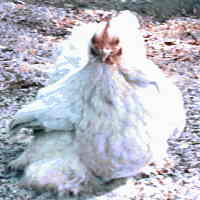 Cochins were first imported
to America and England in 1845. The large Standard Cochins are truly awesome
birds. The Bantam variety makes wonderful pets for children and is the easiest
to tame. There are many color varieties of Cohins; Brown, Barred, Black,
Buff, Golden-Laced, Partridge, Silver-Laced, and White. They are of the Asiatic
Class and were originally called the Chinese Shanghai Fowl because they
originated in the Shanghai district of China. The name changed later to 'Cochin
China' and then finally shortened to just 'Cochin'.
Cochins were first imported
to America and England in 1845. The large Standard Cochins are truly awesome
birds. The Bantam variety makes wonderful pets for children and is the easiest
to tame. There are many color varieties of Cohins; Brown, Barred, Black,
Buff, Golden-Laced, Partridge, Silver-Laced, and White. They are of the Asiatic
Class and were originally called the Chinese Shanghai Fowl because they
originated in the Shanghai district of China. The name changed later to 'Cochin
China' and then finally shortened to just 'Cochin'.
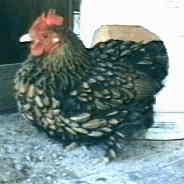 After arriving in England,
they started a chicken 'gold-rush'. Several rumors fueled this mass 'Cochin
Craze'. For example, one was that the birds could manage to lay several eggs
a day. Another was that the meat was the finest of any meat in the world.
However the most significant rumor was the one that claimed that a person
could make a fortune with them and become rich in a relatively short time.
Unfortunately, as it turns out, the Cochin barely manages to lay a few eggs
a week and despite their massive appearance, they are not as heavy as they
appear, which makes them unattractive for commercial meat production. In
about as much time as they became famous, their popularity declined as more
people realized the true facts about these birds. Today, the only fame reserved
for these birds is exhibition at poultry shows where they still prove to
be the center of attraction.
After arriving in England,
they started a chicken 'gold-rush'. Several rumors fueled this mass 'Cochin
Craze'. For example, one was that the birds could manage to lay several eggs
a day. Another was that the meat was the finest of any meat in the world.
However the most significant rumor was the one that claimed that a person
could make a fortune with them and become rich in a relatively short time.
Unfortunately, as it turns out, the Cochin barely manages to lay a few eggs
a week and despite their massive appearance, they are not as heavy as they
appear, which makes them unattractive for commercial meat production. In
about as much time as they became famous, their popularity declined as more
people realized the true facts about these birds. Today, the only fame reserved
for these birds is exhibition at poultry shows where they still prove to
be the center of attraction.
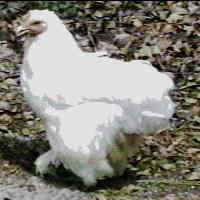 They are distinguished by a profusion
of soft feathering and a great abundance of down fiber in the under-fluff.
They have an extraordinary amount of long, soft plumage. This produces the
apearance of making them look larger than they really are. The female Cochins
have a prominant development of feathers at the base of their tails which
forms what is called a 'cushion'. The 'cushion' somewhat resembles a 'bun'
- a popular women's hair style of the past. Close-fitting plumage is a serious
defect, as is, lack of a cushion.
They are distinguished by a profusion
of soft feathering and a great abundance of down fiber in the under-fluff.
They have an extraordinary amount of long, soft plumage. This produces the
apearance of making them look larger than they really are. The female Cochins
have a prominant development of feathers at the base of their tails which
forms what is called a 'cushion'. The 'cushion' somewhat resembles a 'bun'
- a popular women's hair style of the past. Close-fitting plumage is a serious
defect, as is, lack of a cushion.
Cochins are primarily bred for exhibition. Disqualifications would include
Vulture hocks, shanks not feathered down the outer sides, outer toes not
feathered to the last joint, and bare middle toes. Combs are single and of
medium size, set firmly on the head.
When they were first accepted to the Standard in 1874, only the Buff, Partridge,
White, and Black varieties were included. It was not until 1965 that the
Sliver-Laced, Gold-Laced, Blue, and Brown breeds were accepted. The Barred
breed was admitted in 1982.
Several other breeds have been derived from Cochin blood.
 Barred
Cochin Bantam Cock
Barred
Cochin Bantam Cock
 Barred
Cochin Pair
Barred
Cochin Pair
 Blue Splash
Cochin Cock
Blue Splash
Cochin Cock
 Silver Laced
Cochin Pullet
Silver Laced
Cochin Pullet
 White Cochin
Pair
White Cochin
Pair
Back to the Asiatic Standard Breeds Page
Back HOME
Photos by Dennis Hawkins
Copyright 1995-2004 by Dennis Hawkins, All Rights Reserved.