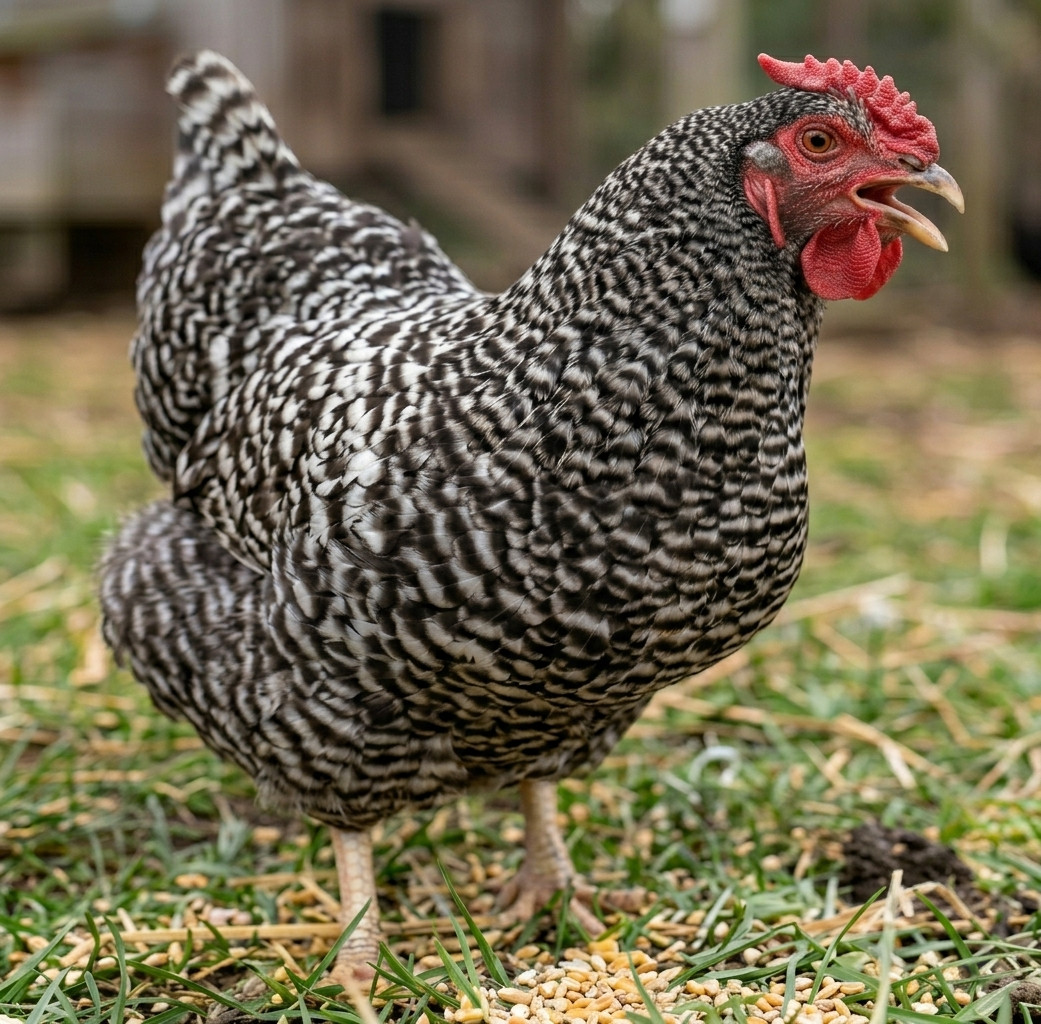
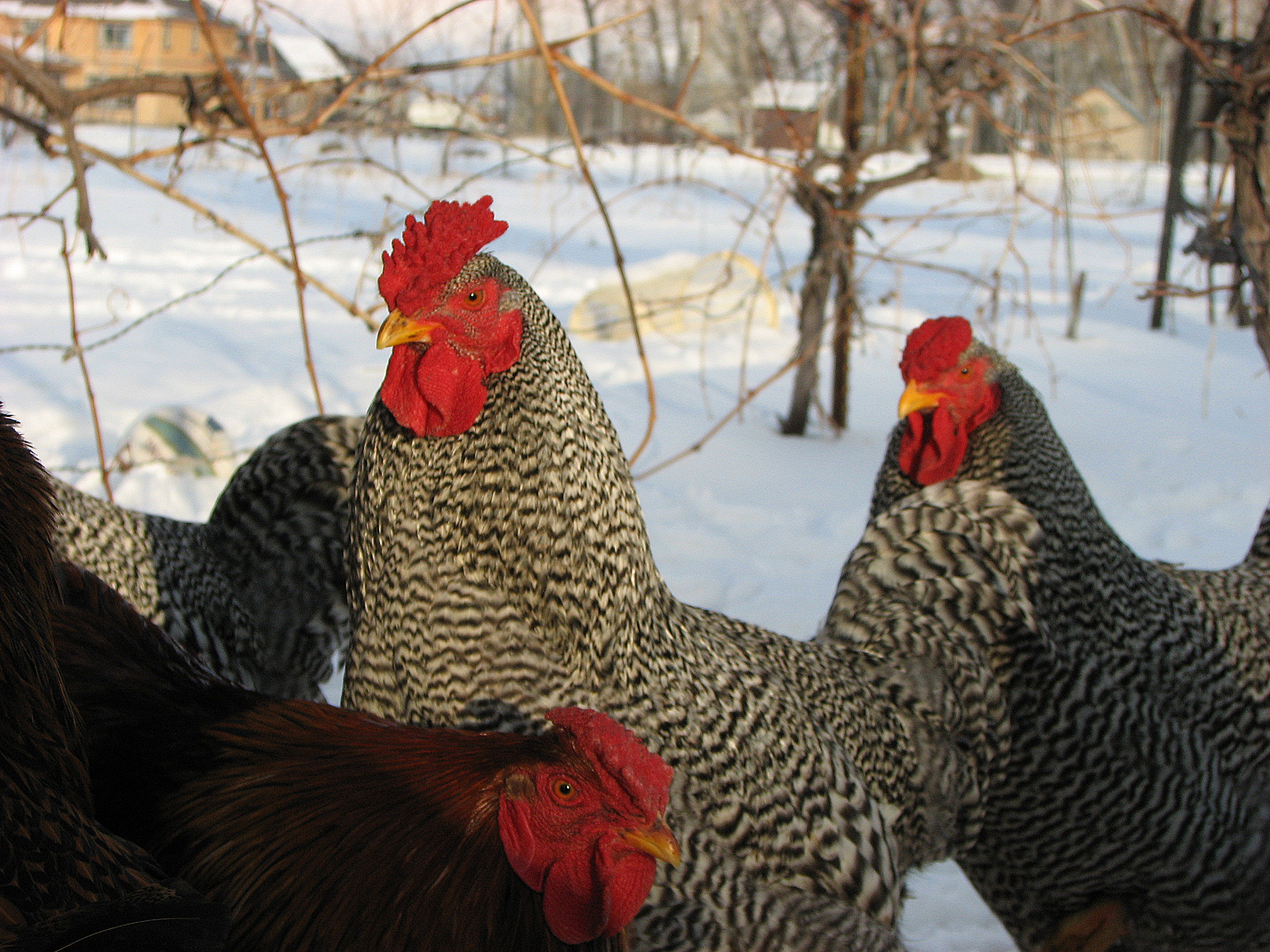
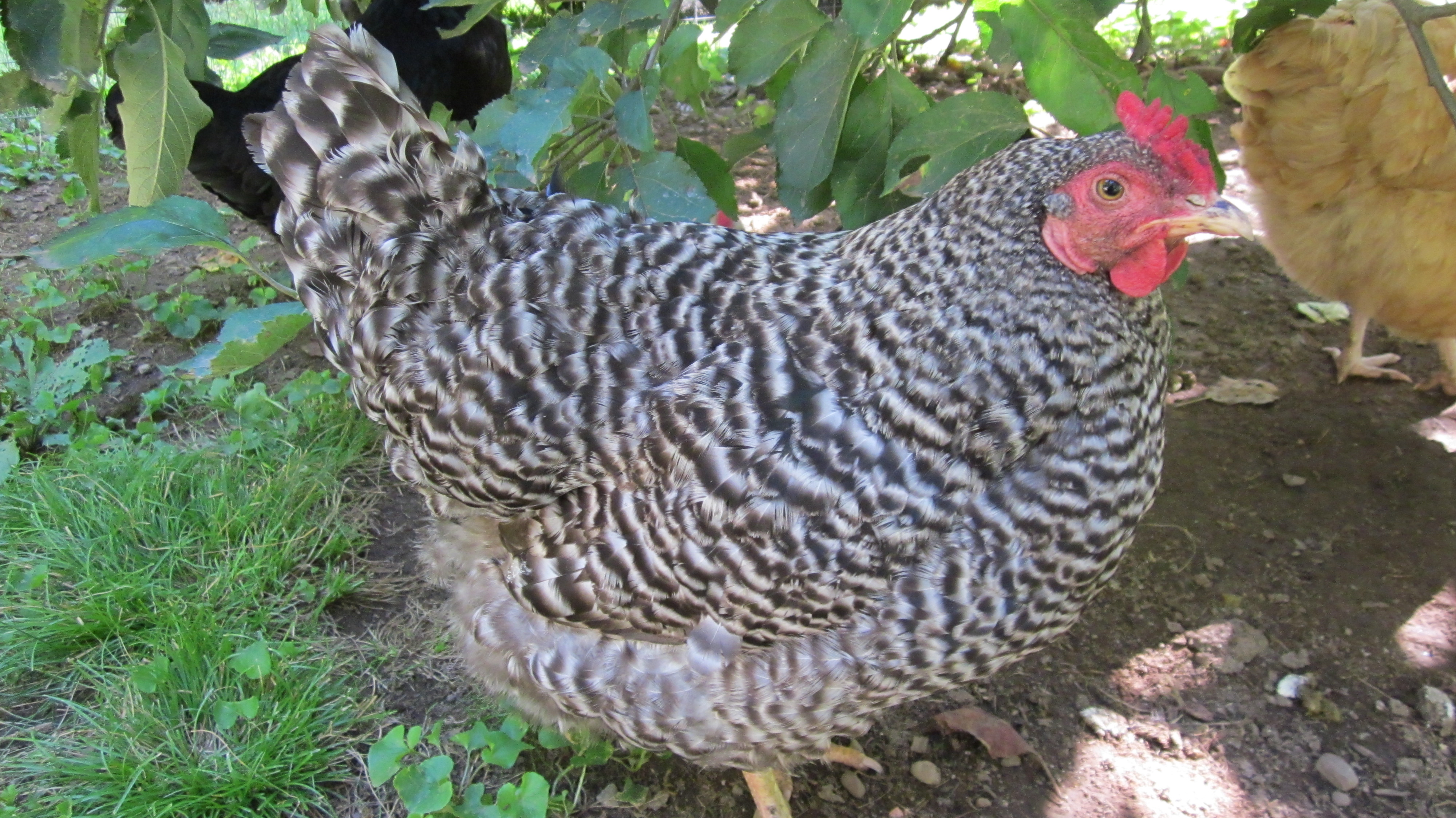
The Dominique is an American breed of chicken characterized by black-and-white barred plumage and a rose comb. It is considered to be the oldest American chicken breed, thought to have descended from mixed breed "Dunghill Fowl" brought to America by pilgrims aboard the Mayflower in 1620. By 1750, it was well known, and by the mid-nineteenth century, it was widely distributed in the eastern United States.
Dominiques are medium size, with mature birds weighing between 5-7 lb (2.3-3.2 kg). They have a high head, rose comb with a single backward-pointing spike, red earlobes and wattles, and a yellow beak, legs and feet. Dominiques have better resistance to frostbite than some other breed due to their plumage being held tight to their body and also because of their rose comb's limited surface area.
Dominiques are dual-purpose birds, primarily kept for their brown eggs, with hens laying about 200 large eggs per year.
Historically known by various names like Dominicker, Dominic, Pilgrim Fowl or Blue Spotted Hen, the breed was exhibited at the first American poultry show in Boston (1849). Later, the Dominique was cross bred with a Black Java which produced a larger, similar looking bird to the Dominique, but had a single straight comb. In early poultry shows, both birds were originally exhibited as "Dominiques", but in 1870, poultry show judges concluded that they were different enough that they would have to be exhibited as different breeds. The new, straight combed version was later renamed to "Barred Plymouth Rock". Barred Rocks and Dominiques also differ in the way their barring aligns with other feathers. In the Dominique, the black and white portions of the feathers do not align with neighboring feathers, whereas in Barred Rocks, they are aligned producing a uniform striped appearance. In 1874, the Dominique was included in the first edition of the American Standard of Perfection of the American Poultry Association.
During the twentieth century, Dominique numbers declined significantly to the point of having fewer than 500 breeding birds in North America. The were given a conservation status of 'critical', but a recovery initiative that began in 1983 helped upgrade their conservation status to 'watch'.