Despite the name, the Holland Chicken is a completely American breed that was developed at Rutgers University in New Jersey, USA. It gets the name "Holland" from some of the original birds that were imported from Holland that were used to create this breed. This breed was primarily developed for dual-purpose use – both as meat and eggs. Due to increasing demands for white eggs during the mid-1930s, farmers sought a dual-purpose breed capable of providing both good-quality meat and large quantities of white eggs. At the time, people believed that white eggs were of superior quality and taste compared to brown ones. Prior to this demand, most chickens that laid white eggs tended to be lightweight birds which were unsuitable for meat production.
Rutgers University in New Jersey was the first to start breeding these distinct varieties of Holland Chickens – the barred and the white variety. The White Hollands were created by crossing imported Dutch chickens with several American breeds like Leghorns, Rhode Island Reds, New Hampshires and Lamonas. On the other hand, Barred Hollands resulted from another cross involving Australorps, Barred Plymouth Rocks, Brown Leghorns, and White Leghorns. Both varieties were officially recognized by the American Poultry Association in 1949.
There are two main varieties of Holland - barred and white. Both have straight red combs, and yellow legs and beaks. Barred Hollands have a black and white feather pattern that is very similar to a Dominique in that it is irregular as opposed to a Barred Rock. The feather pattern on Barred Hollands is a natural camouflage which helps protect them from predators.
The Holland Chicken's size and weight are notable features that set it apart from other breeds. Males typically weigh between 6 to 8.5 lbs (2.7–3.8 kg), while females average slightly less, ranging from 4 to 6.5 lbs (1.8–2.9kg) at maturity. This medium-large size contributes to their meatiness, making them an attractive choice for farmers focusing on meat production.
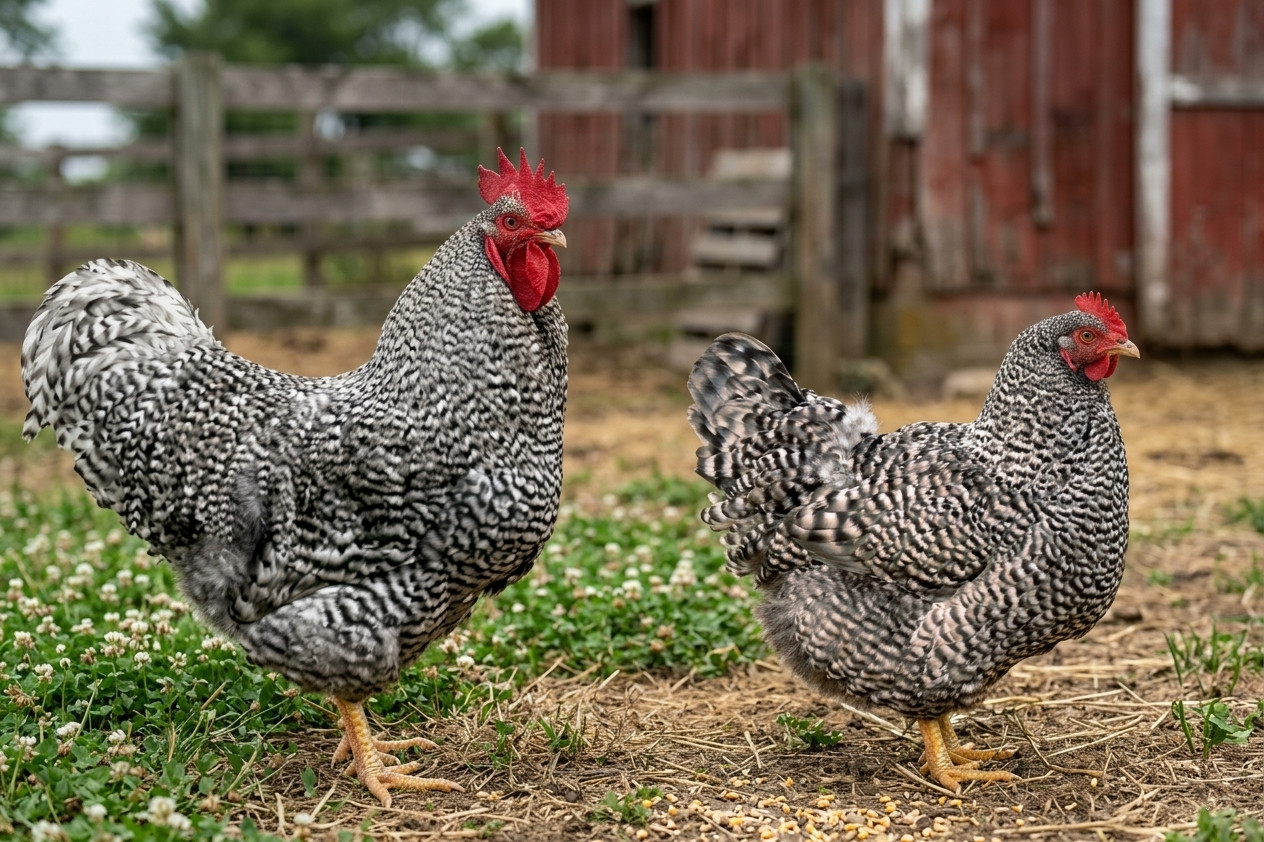
As for temperament, Holland Chickens are known for being friendly, docile, approachable, and cheerful – traits that make them excellent pets as well as farm fowl. Their sociable nature allows them to interact comfortably with humans, particularly children who might enjoy handling these birds safely due to their gentle disposition.
Holland Chickens thrive best when allowed to free-range and will forage for their own food. They are fairly low-maintenance yet hardy enough to withstand cold temperatures – qualities that make them and ideal choice for backyard flocks. However, in harsh colder climates, properly insulated and predator proof housing is still required. Males can get frostbite on exposed combs if not kept in warm housing.
In terms of health and lifespan considerations, Holland Chickens boast robust constitutions with minimal reported health issues throughout their approximately 8 year lifespan. They grow slowly compared to some other breeds but compensate by producing substantial amounts of flavorful meat thanks largely in part to their muscular build.
Female White Hollands will lay about 200-240 medium-large sized white eggs each year. This makes them suitable candidates for those seeking consistent egg supply without compromising taste or quality. Hens will occasionally become broody which will allow occasional raising of chicks naturally under maternal care if desired.
The versatile Holland Chicken stands out amongst poultry breeds not only due to its rich heritage tracing back centuries ago yet has become a critically endangered breed today. If the breed is to survive, concerted efforts towards preservation initiatives will be required.