Overview
The Java chicken is one of the oldest breeds developed in the United States and is considered the second American breed after the Dominique. Although its name references the island of Java, the breed was actually developed in America from chickens of uncertain Asian origin, likely imported from the Far East during the first half of the 19th century.
Javas were known to exist in the United States between 1835 and 1850, though they may have been present even earlier. The breed did not reach Britain until 1885, which is notable because some later claims incorrectly suggested the breed originated in Java and came to America via England.
By the mid-to-late 1800s, Javas were widely popular, especially in states like New York and New Jersey. They were highly valued as a dual-purpose homesteading bird, known for both meat production and egg laying. In fact, they became a foundational breed for many important American chickens, including the Jersey Giant, Plymouth Rock, and Rhode Island Red. These newer breeds eventually surpassed the Java in popularity, contributing to its decline.
The Java was officially admitted to the American Poultry Association (APA) Standard of Perfection in 1883. At that time, Black, Mottled, and White varieties were recognized, though the White was removed before 1910 due to its similarity to the White Plymouth Rock. The Auburn variety, a color sport of the Black Java noted as early as 1879, was never officially recognized but played a role in developing the Rhode Island Red.
By the late 20th century, Java chickens had nearly disappeared. Fewer than 500 breeding birds from five or fewer breeding flocks are known to exist. However, conservation efforts beginning in the 1990s by organizations and institutions such as Garfield Farm Museum have helped revive the breed. Today, Javas remain rare and are listed on conservation watch lists, with ongoing efforts to preserve and restore lost varieties like White and Auburn.
General Characteristics and Appearance
Javas are large, heavy birds with a strong, rectangular body shape, a long sloping back (the longest in the American class) and a full, well-rounded breast. This body type is one of their most distinguishing features and resembles that of the Rhode Island Red. Javas have single combs of medium size with 5 well-defined points. Their wattles are small to medium, earlobes are small and red, and all Javas have yellow skin. Originally, they also had tight feathering similar to breeds like the Buckeye.
Javas grow slowly compared to modern commercial breeds and may take six months or longer to mature.
Weights
- Roosters: about 9.5 lbs
- Hens: about 7.5 lbs
- Dressed weight: 6.5–8 lbs
Color Varieties
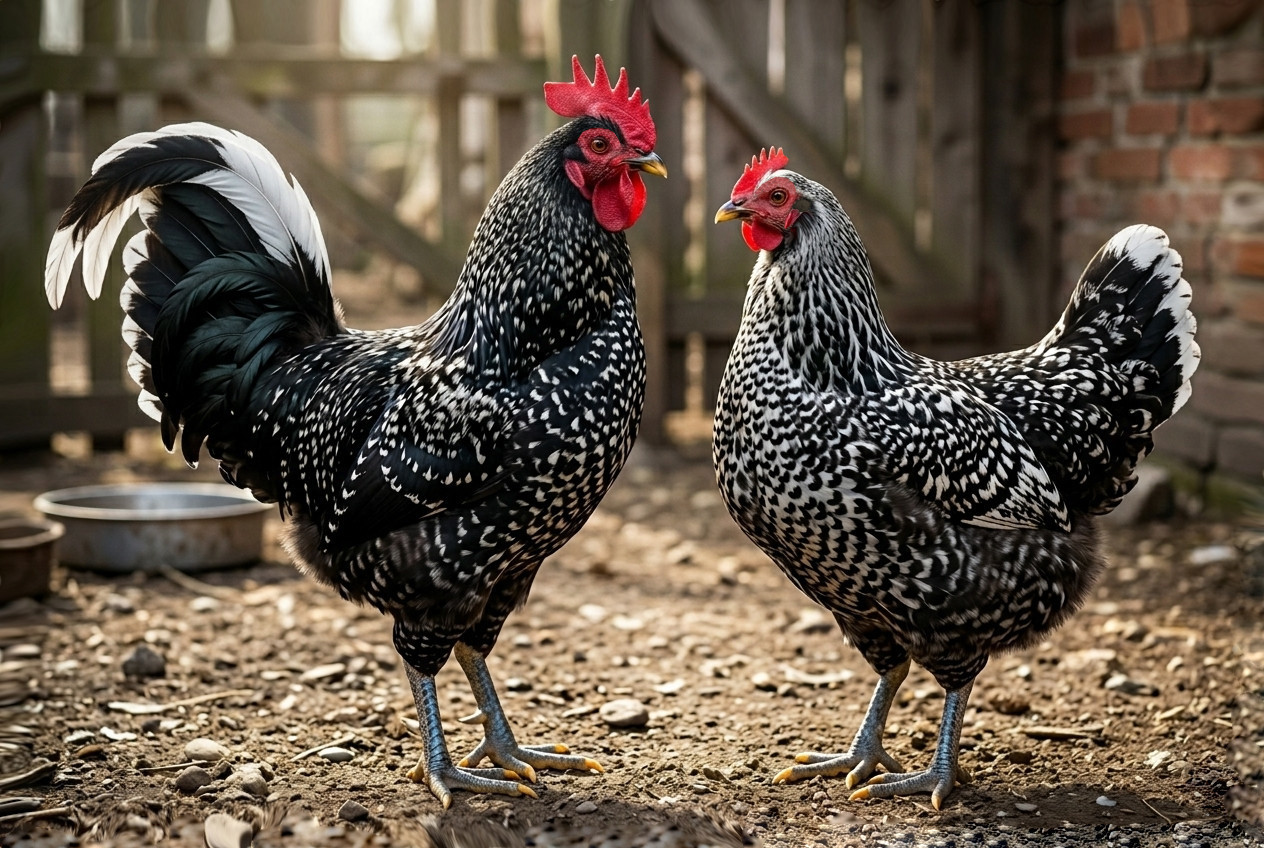
Javas historically come in four varieties: Black, Mottled, White, and Auburn. However, today only Black and Mottled Javas are recognized by the APA, though dedicated breeders are working to restore White and Auburn lines.
- Black Java: Known for its rich black plumage with a beetle-green sheen—often considered exceptionally brilliant. It has dark brown to nearly black eyes and black legs with yellow soles.
- Mottled Java: Black feathers tipped with white, creating a spotted appearance that becomes more pronounced with age. They have reddish or intense red eyes and legs that are leaden-blue mottled with yellow soles.
- White Java: A rare variety with yellow legs and light-colored features; originally recognized but later removed from the APA standard.
- Auburn Java: An unrecognized variety, noted historically as a mutation of the Black Java and important in developing the Rhode Island Red.
Temperament and Behavior
Javas are widely regarded as calm, docile, and friendly birds. They are rarely aggressive and tend to get along well with other chickens, making them ideal for mixed flocks and suitable for families with children.
While adults are steady and gentle, chicks may be somewhat flighty. Javas also tend to stay together in tight-knit flocks.
They are moderately noisy overall, though roosters can be vocal and protective.
Productivity
Javas are a classic dual-purpose breed, valued for both egg production and meat quality.
Egg Production Facts
- 150–180 large eggs per year.
- Egg color ranges from tinted to dark brown
- Begin laying around 6–7 months
- Continue laying well into winter and longer than many breeds
- Hens are highly broody and excellent mothers
Meat Production Facts
- Historically prized for meat in the 19th century
- Produce a well-fleshed carcass despite slow growth
- Meat is often described as flavorful and high quality
Hardiness and Adaptability
Javas are a hardy heritage breed capable of thriving in a wide range of conditions.
Hens are especially tolerant of cold weather, however, roosters with larger combs may be susceptible to frostbite. In warmer climates, Javas do quite well, but poultry farmers need to make sure that they have access to plenty of cool water and ready access to shade. Their sleeping area must be well ventilated to prevent heat build up.
Management
- Javas are exceptional foragers.
- They obtain a significant portion of their diet when allowed to free range.
- Lower feed bills due to their foraging ability.
- Tolerate confinement without major behavioral issues.
- Prefer large spaces to roam.
- Show good predator awareness, aided by their size and agility (though lighter-colored birds like White Javas may be more vulnerable).
- Typically live 5–8 years.
- Hardy breed that has few health issues.
Significance and Modern Status
The Java is considered a foundational American breed and played a critical role in shaping modern poultry. Despite its historical importance, it became overshadowed by the very breeds it helped create.
By the late 20th century, it was nearly extinct, but conservation efforts have helped stabilize its population. Today, it remains rare and is still considered endangered, with continued work focused on preserving its genetics and restoring lost varieties.
Often described as a “best-kept secret” among homesteaders, the Java chicken combines productivity, hardiness, and gentle temperament, making it an excellent choice for small farms and backyard flocks.