Breed Facts
Class: American Class
Origin: United States, New Jersey
APA Recognition: Black variety accepted into the Standard of Perfection in 1922
Conservation Status: Recovering; considered a sustainable heritage breed
Weights:
Hen: 10 lbs
Rooster: 13 lbs
Pullet: 8 lbs
Cockerel: 11 lbs
Purpose: Primarily an egg-laying bird; also used as a secondary meat source and for pets
Egg Production:
180–260 eggs annually (approximate)
Egg color: Brown
Egg size: Large
Behavior and Traits:
Temperament: Docile
Broodiness: Often broody and capable setters
Roost height: 2–4 feet
Breeding Information:
Mating ratio: 1 male to 9 females
Fertility rate: 65–80%
Gender accuracy (when sexed): 80–85%
Breeder Information:
Murray McMurray, Cackle Hatchery and other hatcheries have Jersey Giant chicks. Occasionally, you can find them at Tractor Supply Stores during their chick days sales.
History and Development
The Jersey Giant is an American breed developed in Burlington County, New Jersey, in the late 1800s by John and Thomas Black. It was created to serve as a large meat bird capable of rivaling turkey, which was the primary table poultry at the time.
The breed was developed by crossing Black Javas, Black Langshans, and Dark Brahmas. It was officially admitted to the American Poultry Association’s Standard of Perfection in 1922. Additional color varieties were later recognized: white in 1947 and blue in 2002.
Historically, Jersey Giants were even larger than they are today and were once used in the meat industry as broilers and capons. However, their slower growth rate led to their replacement by faster-growing commercial strains.
Size and Meat Qualities
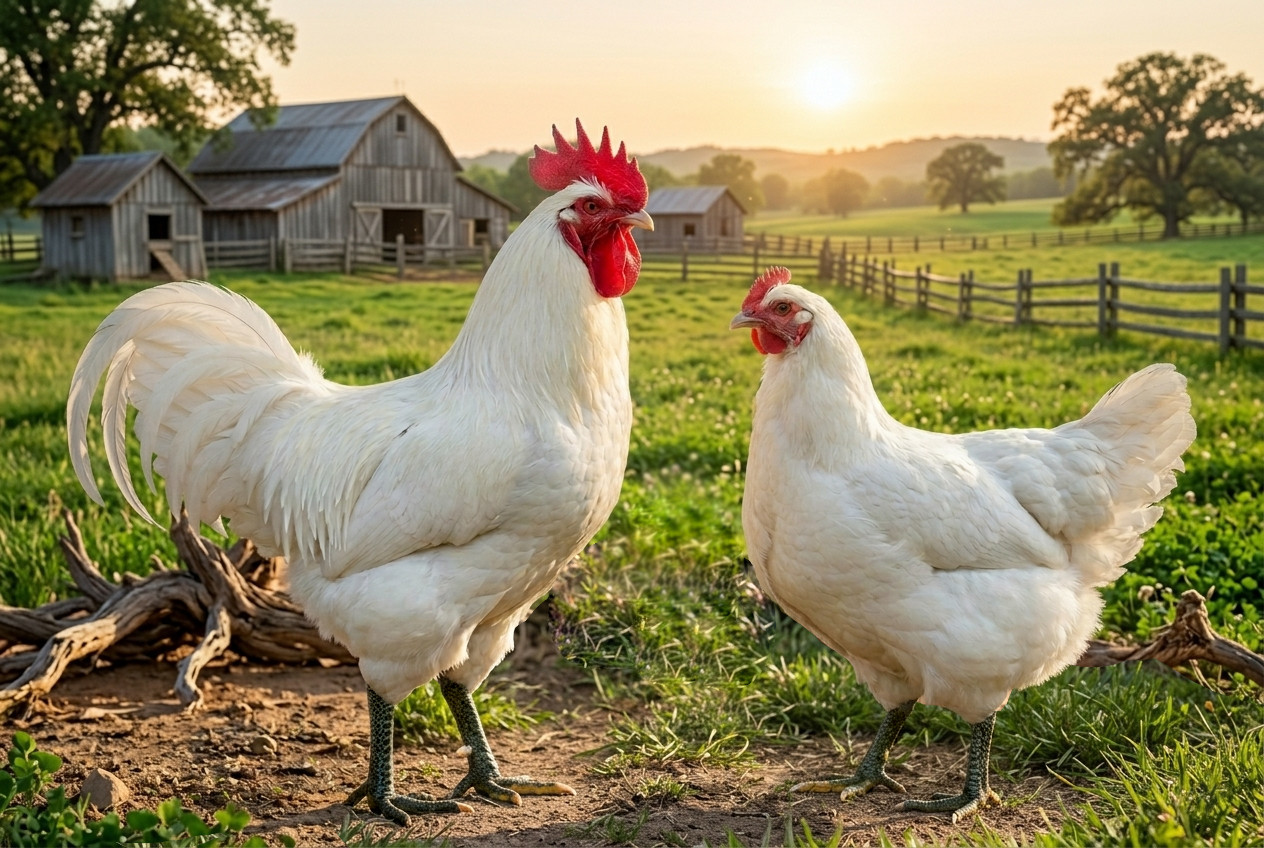
Jersey Giants are among the heaviest chicken breeds and are widely regarded as the largest dual-purpose breed.
Mature hens typically weigh around 10 pounds, while roosters average about 13 pounds, with some individuals reaching between 11 and 14 pounds. Pullets average about 8 pounds, and cockerels about 11 pounds. The black variety is generally about one pound heavier than the white.
Although they require more time and feed to reach full size, they produce a substantial amount of meat. Due to their slower growth and less efficient feed conversion, they are not commonly used in commercial broiler production today but remain valuable in homestead and heritage meat programs.
Egg Production
Despite their large size, Jersey Giant hens are reliable layers. They typically produce between 180 and 260 large brown eggs per year, with especially good production during the winter months.
They are considered a practical dual-purpose breed, suitable for both egg production and meat use.
Appearance and Physical Traits
Black Jersey Giants have deep black plumage with a greenish sheen when viewed in sunlight, giving them a glossy look. The breed also exists in white and blue varieties.
Their legs and toes are typically willow-colored or very dark with the soles of their feet being yellow. Chicks may show some white feathers during early growth stages, but these usually disappear as the bird matures, with full adult coloration developing by about six months of age.
Temperament and Hardiness
Jersey Giants are known for their calm and gentle nature. They are easy to handle, and roosters are seldom aggressive. Their size makes them less prone to flight, which helps with containment in backyard settings.
They are robust birds and tolerate cold conditions well, making them suitable for a range of climates. Their docile temperament makes them a good fit for small farms and backyard flocks.
Flock Management and Breeding
A typical breeding ratio is one male to nine females. Fertility rates generally range from 65% to 80%, and professional sexing yields about 80% to 85% accuracy.
Hens frequently go broody and are capable mothers. Due to their size, they prefer lower roosts, typically between two and four feet high.
Summary
The Jersey Giant remains a notable American heritage breed valued for its impressive size, calm temperament, and dependable egg production. While no longer used in large-scale commercial meat production, it continues to serve as a practical and sustainable choice for homesteads and small farms.