The New Hampshire (also known as the New Hampshire Red) is a quintessential American Heritage breed. Renowned for its vigor and utility, it has transitioned from a specialized regional strain into a cornerstone of the modern poultry industry.
Origin and History
Developed in the early 20th century primarily within New Hampshire and Massachusetts, this breed descended directly from the Rhode Island Red. Unlike many breeds of that era, it was refined through thirty years of intensive selection for performance traits—specifically rapid growth and early maturity—rather than aesthetic color.
- Key Figure: University of New Hampshire professor A.W. “Red” Richardson is credited with the primary breakthroughs in the breed’s development.
- Official Recognition: The American Poultry Association (APA) admitted the breed to its Standard of Perfection in 1935.
- Industry Impact: Following WWII, New Hampshires were stars of the "Chicken of Tomorrow" contests. Their genetics remain foundational in modern commercial broiler lines today.
- State Honor: In 2018, following a petition by elementary school students, the New Hampshire chicken was officially designated as the state poultry.
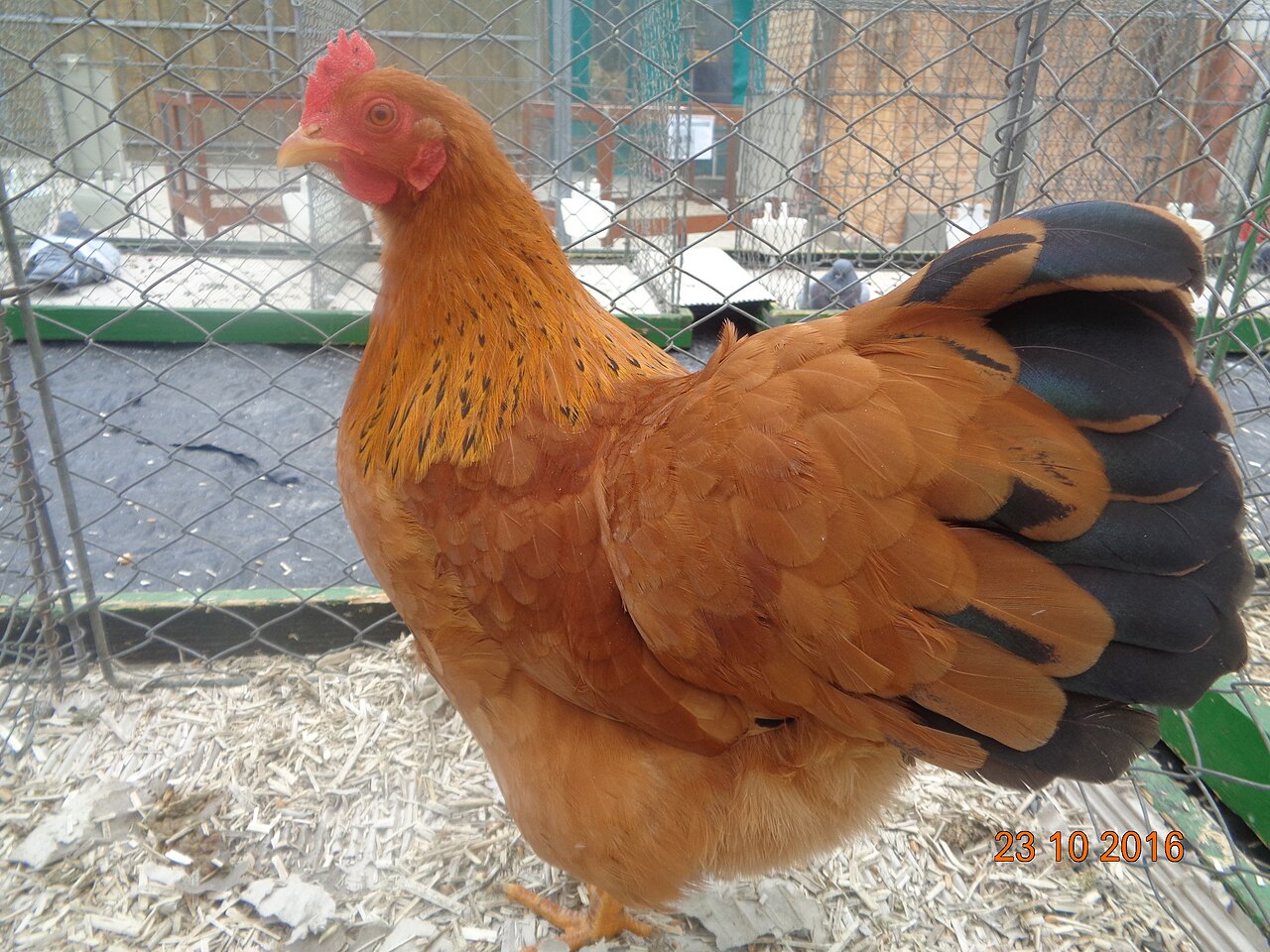
New Hampshire Pullet
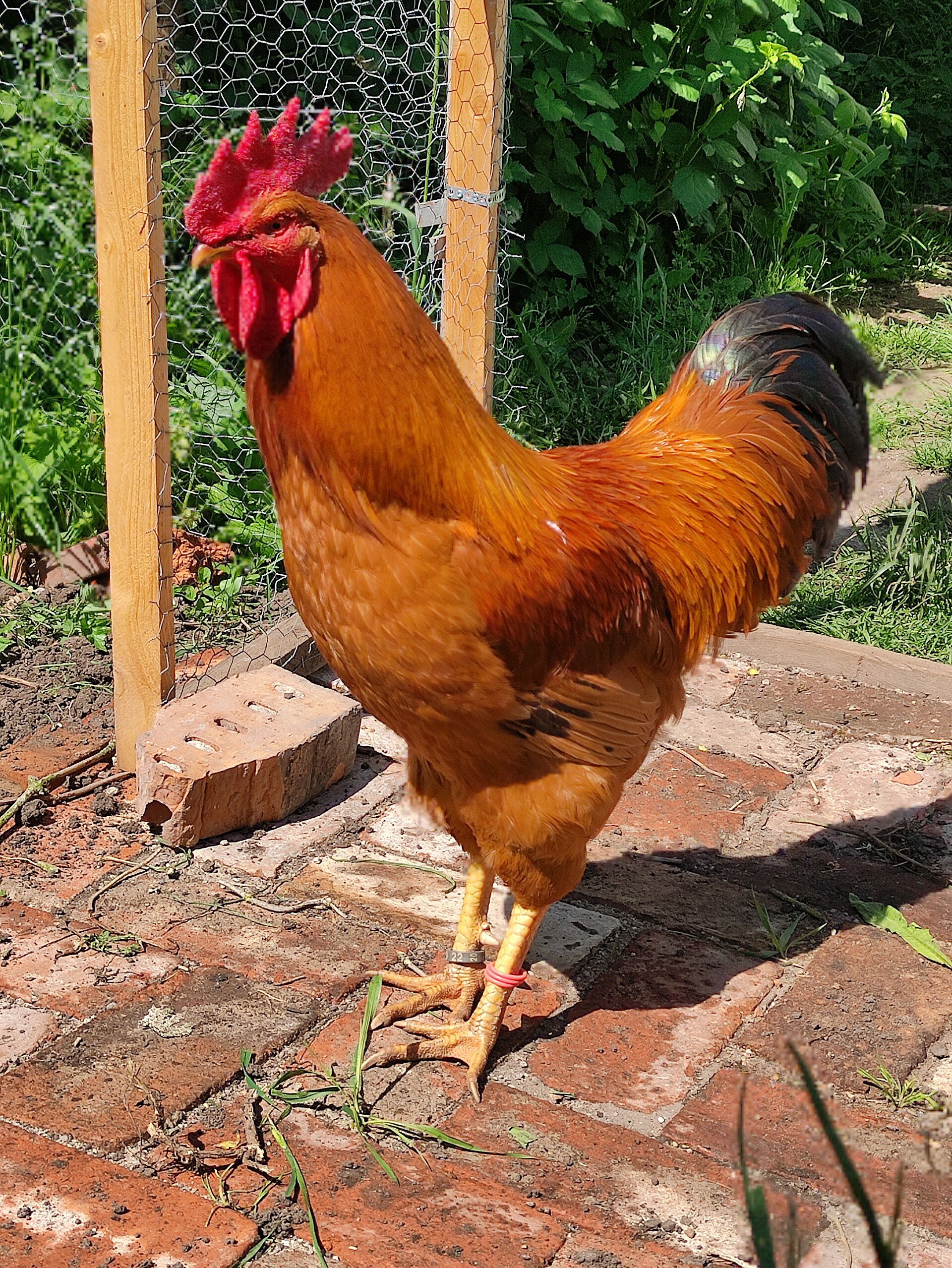
New Hampshire Rooster
Physical Characteristics
The New Hampshire is a medium-large bird with a deep, broad body. While its ancestor, the Rhode Island Red, is often described as "brick-shaped," the New Hampshire has a more triangular profile.
- Coloration: The plumage is a brilliant chestnut or golden bay. This is notably lighter than the deep mahogany of the Rhode Island Red and can bleach to a paler shade in the sun.
- Markings: They feature black tail feathers, and hens often show black ticking on their neck and wing primaries.
- Features: They possess a medium-to-large single comb, reddish-bay eyes, and yellow skin and legs. A reddish line running down the shanks to the toes is a desirable trait in roosters.
- Standard Weights: Mature roosters weigh approximately 8.5 lbs, while hens weigh about 6.5 lbs.
Performance and Temperament
As a dual-purpose breed, the New Hampshire excels at producing both meat and eggs, making it an ideal choice for homesteads and pastured poultry systems.
- Egg Production: Hens typically lay between 200 and 220 large, light-brown eggs annually. They are reliable layers even in marginal conditions.
- Meat Quality: They yield a meaty, well-finished carcass. Note that "production strains" bred for maximum growth may lack the egg-laying consistency of heritage strains.
- Maternal Instincts: Some strains are prone to broodiness, making them excellent mothers for those wishing to raise a sustainable, self-replenishing flock.
- Behavior: Generally friendly and suitable for beginners, they are active and can be assertive. They may bully more docile breeds and some roosters can be aggressive during the breeding season.
- Hardiness: They are highly cold-tolerant and predator-savvy, though their large combs should be protected from extreme frost.
Conservation Status
Despite its historical importance to the poultry industry, the New Hampshire is currently listed in the "Watch" category by The Livestock Conservancy. Maintaining the balance between meat and egg production is vital for the continued conservation of this heritage breed.