The Plymouth Rock: A Pillar of American Poultry
The Plymouth Rock is a storied American breed that served as the most popular chicken in the United States from the late 19th century until World War II. Renowned as a versatile dual-purpose bird, it is valued for both its high-quality meat and its consistent production of brown eggs.
Historical Development
While a breed by this name was first exhibited in Boston in 1849, those original birds vanished from the record. The modern lineage began in 1869 in Worcester, Massachusetts, when D.A. Upham exhibited birds created from crossing Black Java hens with a barred, single-combed male.
- Genetic Foundation: Genomic analysis suggests the breed is primarily derived from the Dominique, with significant contributions from the Java and Cochin.
- Official Standard: The Plymouth Rock was recognized as a distinct breed in the first American Standard of Excellence in 1874.
- Industrial Role: White Plymouth Rocks eventually became a cornerstone of the commercial industry, often crossed with Cornish strains to produce modern broiler hybrids.
- Conservation: As of 2023, the breed is listed as "recovering" by the Livestock Conservancy, indicating a healthy resurgence in its population.
Physical Characteristics
The Plymouth Rock is a sturdy, heavy-bodied bird designed for utility. Breeders emphasize quality of feathering, as it ensures early maturity and protection from the elements.
- Body and Plumage: They possess a long, broad back and a deep breast. While Barred was the original pattern, several varieties are now recognized, including White, Buff, Silver Penciled, Partridge, Columbian, and Blue.
- Head Features: Both males and females feature a bright red, medium-sized single comb with five well-defined points. Their eyes are typically bright, and their beaks are yellow or horn-colored.
- Legs and Skin: The skin and unfeathered legs are yellow. In roosters, a medium-sized frame is preferred over "overlarge" specimens, which can become clumsy and less productive.
- Standard Weights:
- Cock: 9.5 lbs (Standard) / 3 lbs (Bantam)
- Hen: 7.5 lbs (Standard) / 2.5 lbs (Bantam)
Performance and Utility
The Plymouth Rock is an excellent choice for a variety of climates due to its cold hardiness and easy-to-manage temperament.
- Egg Production: Hens are productive layers, typically providing around 200 large brown eggs per year. The shell color can vary from light to dark brown depending on the specific strain.
- Meat Production: They yield a meaty carcass, particularly when maintained at standard weights.
- Broodiness: They are known as good sitters and attentive mothers, making them reliable for those who wish to hatch their own chicks naturally.
- Temperament: These birds are generally active yet docile, thriving in both confined and free-range environments.
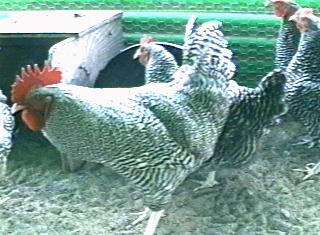
Barred Plymouth Rocks
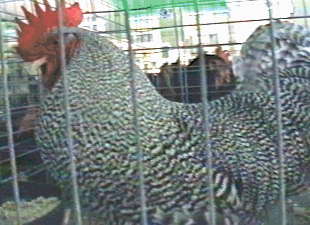
Barred Plymouth Rock Cockerel
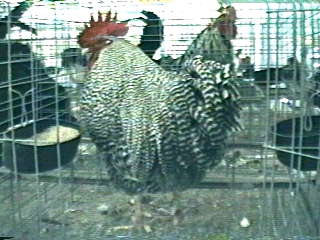
Barred Plymouth Rock Cockerel
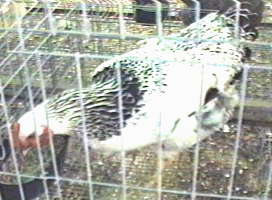
Columbian Plymouth Rock Pullet
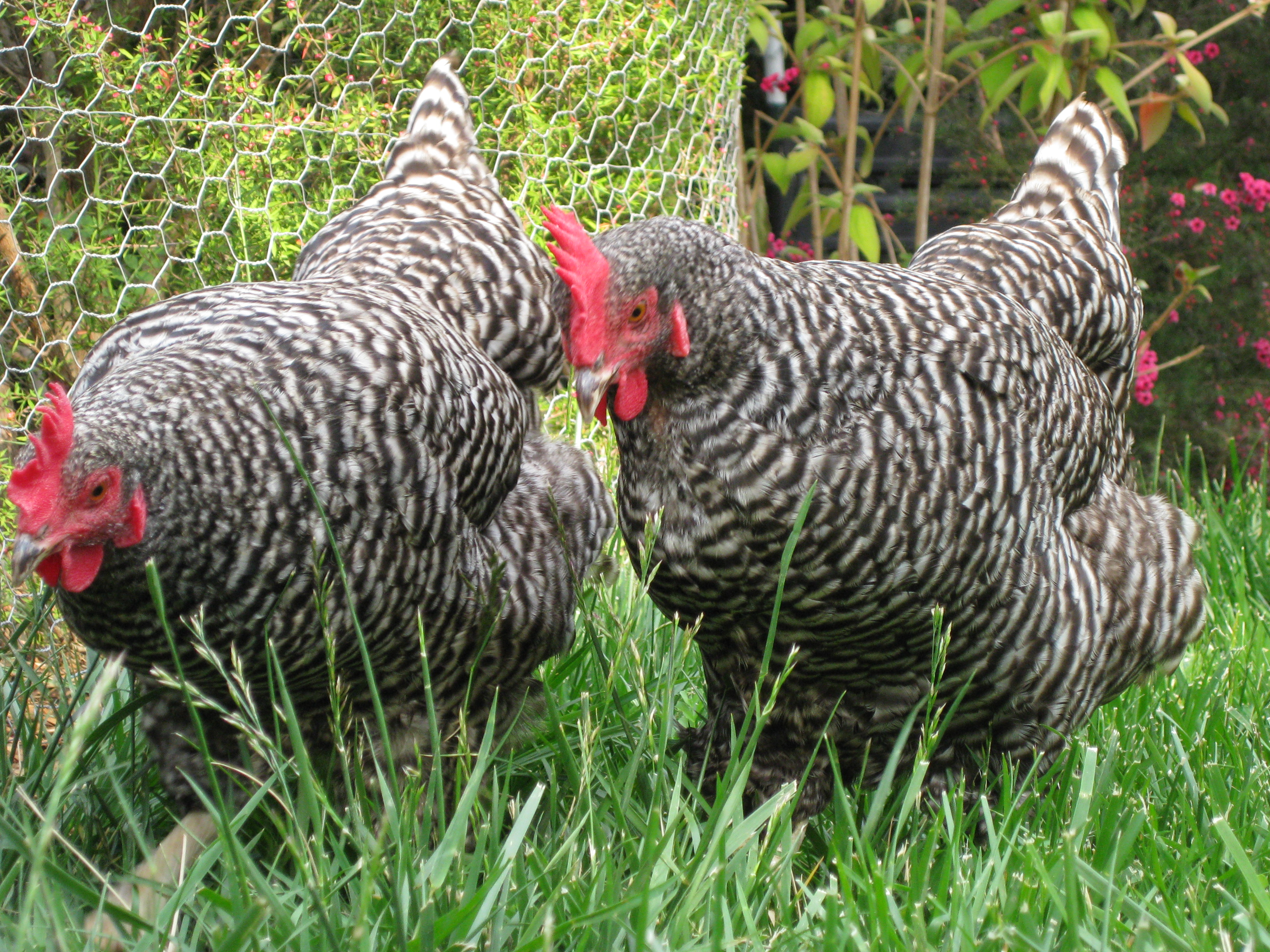
Barred Plymouth Rock Hens