The Wyandotte: An American Heritage Breed
The Wyandotte is an American breed of dual-purpose chicken, valued for both its brown eggs and its yellow-skinned meat. Developed in the 1870s and named after the indigenous Wyandot people of North America, the breed was originally known as the "American Sebright" or "Sebright Cochin".
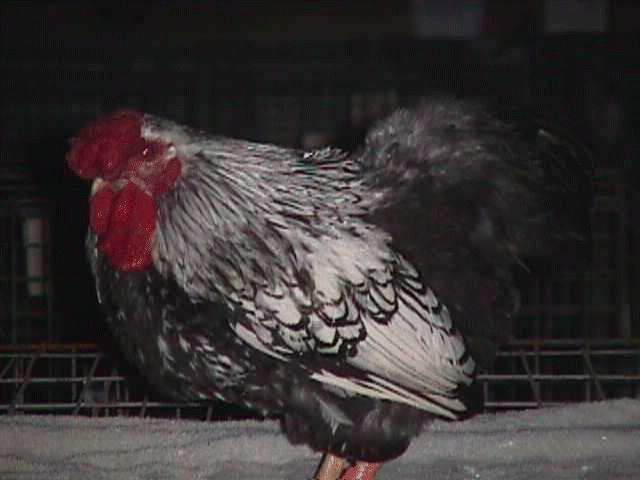
Silver Laced Wyandotte
History and Origins
The true origin of the Wyandotte is not clearly known, though it is believed to have originated in New York State. It is thought to derive from crosses involving Spangled Hamburgs (for the rose comb) and Dark Brahmas (for the color markings). The breed was officially admitted to the American Standard of Perfection in 1883.
In 2016, the breed was removed from the American Livestock Conservancy's priority list and is now considered "recovering" and not currently at risk.
Breed Traits and Characteristics
| Trait | Description |
|---|---|
| Use | Dual-purpose (Meat and Eggs) |
| Weight | Male: 8–9 lb; Female: 6–7 lb |
| Comb Type | Rose |
| Egg Color | Brown |
| Egg Production | ~210 large eggs annually |
| Temperament | Docile |
| Skin Color | Yellow |
| Lifespan | 6 to 12 years |
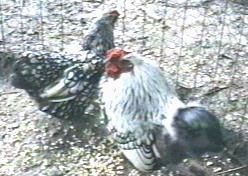
The ideal Wyandotte features formed curved lines and smooth-fitting plumage. Key physical standards include a short, round head with a broad crown, a short and well-arched neck, and a broad, deep breast. The tail should be short, well-spread at the base, and carried at a 45-degree angle.
Standard Varieties
The Silver Laced Wyandotte is the parent variety of the family. Over time, many other variants were developed:
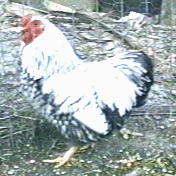
- Golden Laced: Originated in Wisconsin in 1880; produced by mating Silver Laced females with Partridge Cochin-Brown Leghorn crosses.
- White: Originated as "sports" of the Silver Laced variety in 1887.
- Buff: Foundation laid by light-colored Rhode Island Reds; admitted to the Standard in 1893.
- Black: Developed from black sports of the Silver Laced variety.
- Partridge: Admitted in 1901; color patterns derived from Partridge Cochins.
- Silver Penciled: Produced by blending Partridge Wyandotte-Dark Brahma crosses with Silver Laced-Silver Penciled Hamburg crosses.
- Columbian: Named for the 1893 Columbian Exposition of the World's Fair; produced by crossing White Wyandottes and Barred Plymouth Rocks and were admitted in 1905.
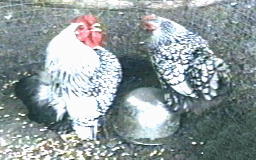
There are currently 8 standard varieties recognized for large fowl and 17 varieties for Bantams, including Birchen, Blue, and White Laced Red. The first Wyandotte bantams were added to the Standard of Perfection in 1933.