The Langshan: A Towering Tale
By Dennis HawkinsThe Langshan is a tall, stately Asiatic breed with a storied history spanning centuries. Renowned for its unique silhouette, gentle temperament, and dual-purpose utility, it remains a favorite for both exhibition and backyard enthusiasts.
History and Origins
- Chinese Heritage: The breed originated in the Langshan (meaning "Wolf Hill") district north of the Yangtze River near Shanghai. It is considered one of the oldest pure races of domesticated poultry.
- Global Introduction: Major A.C. Croad first imported the breed to England in 1872. While initially confused with "Black Shanghai" (Cochin) chickens, it was eventually recognized as a distinct breed.
- Arrival in America: Croad-line birds reached the United States in 1878 and were admitted to the American Poultry Association (APA) Standard of Perfection in 1883.
- Conservation Status: Once highly popular in the late 19th century, Langshans are now primarily exhibition birds and are considered a "threatened" breed by The Livestock Conservancy.
Varieties and Distinct Types
The APA recognizes three color varieties: Black (admitted 1883), White (1893), and Blue (1987). Internationally, the breed diverged into four distinct types based on breeding goals:
- Croad Langshan: The original type, characterized by great body depth and a full breast; this is the primary type found in America.
- Modern Langshan: Developed in England with a focus on height, featuring very long, clean legs and tighter plumage.
- German Langshan: Bred in Germany for long legs entirely free of feathering.
- Australian Langshan: Developed from a mix of Chinese imports and Croad/Modern lines, favored as a utility bird.
Physical Characteristics
- Stature and Shape: Langshans are the tallest non-game breed. They possess a distinctive "V-shaped" (or U-shaped) profile because their high-angled tail feathers are nearly the same height as their heads.
- Feathering: They have tight plumage and feathered legs and outer toes, though they are less heavily feathered than Cochins or Brahmas.
- Coloration: The black variety is known for a striking beetle-green sheen. All varieties feature white skin, dark brown eyes, and bluish-black shanks with pinkish skin visible between the scales.
- Size and Weight: These are heavy, sturdy birds with relatively small bones for their size:
- Cock: 9.5 lbs
- Hen: 7.5 lbs
- Cockerel: 8 lbs
- Pullet: 6.5 lbs
Temperament and Behavior
Langshans are renowned for being exceptionally sweet, docile, and calm. They are easily tamed—often described as "lap chickens"—making them excellent for families with children. Despite their heavy size, they are active foragers and are surprisingly good flyers, capable of clearing high fences.
Production and Utility
- Egg Laying: Hens are excellent layers of 150–200 large, dark brown eggs annually. Occasionally, the eggs may have a unique purplish tint or bloom. Pullets typically begin laying at 6–7 months.
- Meat Quality: As a dual-purpose breed, they provide flavorful white meat. Their body conformation makes them particularly well-suited for use as roasters or capons.
- Maternal Instincts: Hens are faithful mothers. While they may not become broody until late spring, they are highly protective once they have chicks.
Health and Care
- Hardiness: Langshans are resistant to many common health issues and tolerate both heat and cold well. Their subtropical origins make them the only Asiatic breed well-suited for the Southern United States.
- Specific Needs: Because of their feathered feet, they require dry, clean conditions to prevent foot issues. They are susceptible to Marek’s disease, bumblefoot, and prolapse.
- Space Requirements: They require roughly 4 square feet of coop space per bird and benefit significantly from free-ranging (ideally 250 square feet per bird) to satisfy their foraging instincts.
A testament to its enduring legacy, the Langshan continues to captivate enthusiasts around the world, blending historical charm with practical utility in modern poultry keeping.
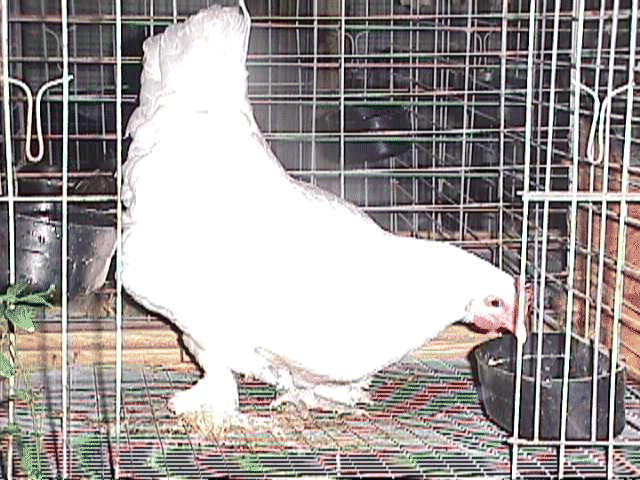
White Langshan Pullet