The Hamburg Chicken Breed
Introduction
The Hamburg, known as the Hollands hoen in Dutch and Hamburger in German, is a Dutch breed of chicken. The name may be spelled "Hamburgh" in the United Kingdom and in Australia.
The history and origins of the Hamburg are not fully known, although some experts believe the breed may be an old breed from the Mediterranean area, possibly Turkey. The Dutch developed what is now known as the Silver Penciled and the Golden Penciled Hamburgs, and Penciled Hamburgs arrived in England sometime prior to 1785.
Legend suggests that the first chicken show involved a contest to determine the most magnificent rooster, held in England around 1800.
The breed was formally named the Hamburg chicken in the early 1840s, with documentation noting that the best birds came from Holland and Hamburg.
Origin and History
- Country of Origin: Holland, United Kingdom.
- Early History: Hamburg-type chickens were found in Holland by the 14th century, although the exact arrival date is uncertain.
- Development: The Dutch are credited with developing the Silver Penciled and Golden Penciled Hamburgs.
- Spread: Penciled Hamburgs made their way to England prior to 1785.
Characteristics and Appearance
- Color Varieties: Six different color varieties were admitted to the American Standard of Perfection in 1874:
- Silver Spangled
- Gold Spangled
- Silver Pencilled
- Gold Pencilled
- Black
- White
- Skin Color: White
- Egg Color: White
- Comb Type: Rose
- Physical Features: The Hamburg is a small or medium-sized breed.
- Specific Traits: The breed possesses a bright red rose comb that tapers into a long spike on males, red wattles, white earlobes, a dark horn beak, reddish-bay eyes, slate-blue legs and feet (with white bottoms), gray bones and skin.
Size and Weight
- Weight: The Hamburg is a smallish ornamental and egg-producing breed with males weighing about 5 lbs and hens weighing about 4 lbs.
- Egg Size: Medium
- Egg Production: Hens lay approximately 120 or 170 white eggs per year, with an average weight of some 50 or 56 g.
Temperament and Behavior
- Flighty: The breed is known to be flighty and is sometimes considered "look but don’t touch."
- Activity and Alertness: They possess a nature of great activity and alertness, and are sometimes considered flighty, which helps them evade predators.
- Need for Space: They like to roam and forage, and do not like confinement. They can fly and have preferred nesting in hedgerows and roosting very high in trees.
- Handling: Early handling is important if medical needs arise.
- Social Behavior: They can be noisy, and the roosters can be a bit aggressive, so they should not be kept in a mixed flock.
- Need for Companionship: They are not a good choice if you seek a pet to cuddle or for children.
Despite their flighty nature, their "nervous" personality is considered a benefit in helping them evade predators. They can do well in both warm and cold climates.
Use and Status
- Primary Use: The Hamburg is bred principally for exhibition and egg production.
- Status: Threatened.
- Legacy: Although the Hamburg began to fall out of favor as a utility bird by 1890 due to the advent of the Leghorn breed, fanciers continued to value them for their beauty. Today, the breed is rare, and the quality of the color varieties varies.
Conclusion
The Hamburg chicken breed, with its distinctive coloring and lively temperament, remains a fascinating example of ornamental poultry history. Despite its status as a historic breed, it is valued today for its beauty and the unique characteristics it brings to the world of chicken keeping. The Silver Spangled is noted as the most popular and easiest to find, prized for its elegant and beautiful appearance, and it is considered one of the most alert breeds.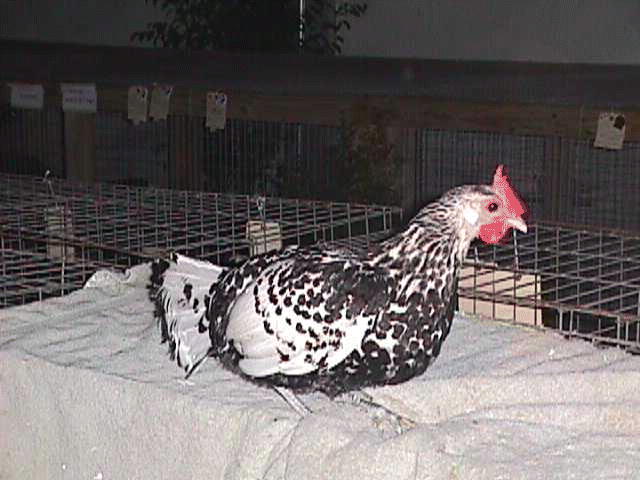
Silver Spangled Hamburg Hen
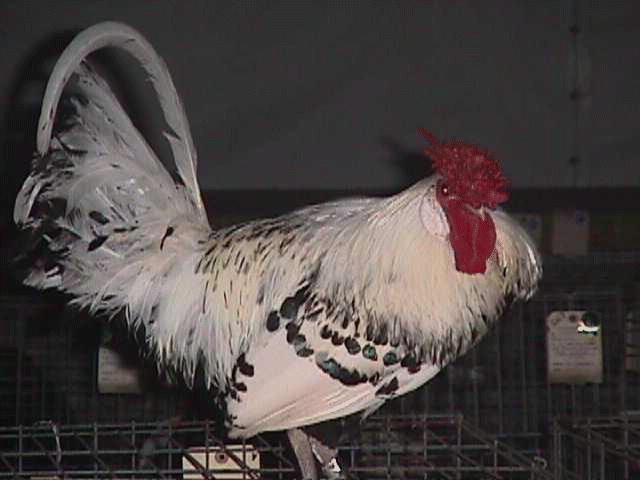
Silver Spangled Hamburg Cock
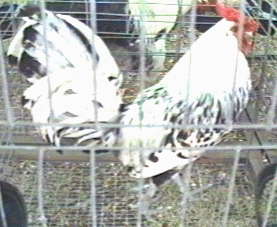
Silver Spangled Hamburg Cockerel
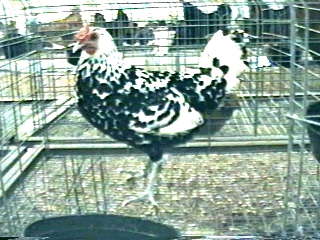
Silver Spangled Hamburg Hen