Lakenvelder: From the Planet Cheron
The Lakenvelder is a rare and striking heritage breed of domestic chicken, originating from the Nordrhein-Westfalen region of Germany and neighboring areas of the Netherlands. Revered for its distinctive appearance, hardiness, and prolific egg-laying ability, this breed is highly valued for both its ornamental qualities and its utility as a producer of high-quality eggs.
History and Origin
The historical origins of the Lakenvelder are not precisely documented, leading to two proposed theories: one suggests origins in Holland, with records dating back to 1727, potentially related to the village of Lakerveld. An alternative history points to Germany, where similar black-and-white fowl were selectively bred, perhaps originating from the Dielingen area in Nordrhein-Westfalen. These early developments led to the breed gaining popularity until the later nineteenth century, when more productive imported breeds began to influence poultry farming.
The Lakenvelder was first formally recorded in 1727 in the Netherlands. In Germany, a breeders' association, the Vereinigung der Lakenfelder Züchter, was established in Hanover in 1907. The breed was introduced to Britain in 1901, and it was formally recognized by the American Poultry Association and published in the American Standard of Perfection in 1939.
Physical Characteristics
The Lakenvelder is recognized for its unique and captivating coloration. It is often described as a black and white banding pattern, similar to the banding found in Lakevelder cattle breeds, but with no actual genetic relationship.
Plumage and Markings:
- The head, neck, hackles (neck feathers), and tail feathers are solid black.
- The rest of the body is predominantly white, with a pale blue-grey under-color.
- The wing primaries and secondaries feature a black inner web.
- The overall pattern creates a belted appearance.
Other Features:
- Legs: The legs are typically a slate-blue color.
- Comb: The fowl possesses a single, five-pointed comb.
- Facial Features: The face, comb, and wattles are bright red, and the earlobes are white.
- Eyes and Beak: The eyes are often bright chestnut or red, and the beak is dark horn.
Temperament and Lifestyle
Lakenvelder chickens are known for being active, energetic, and alert. They are excellent foragers, naturally inclined to roam widely if given the freedom to run. They are generally considered quiet and do not typically become broody. Because of their distrustful flighty nature, they are not especially suited for being held or kept as pets.
- Activity Level: Active, energetic, and flighty.
- Foraging: Excellent foragers who thrive when allowed to roam freely.
- Broodiness: Rarely broody, which allows for consistent egg harvesting.
- Hardiness: The breed is noted for its resilience and heat hardiness, though they do not tolerate cold weather well and require adequate shelter.
Production and Usage
The primary utility of the Lakenvelder lies in its exceptional egg production and its ornamental appeal, as it is not highly suited for meat production.
- Egg Production: Lakenvelders are reliable layers, typically producing between 150 to 200 medium-sized eggs annually.
- Egg Color: Eggs are usually white or tinted (cream).
- Egg Size: Medium.
- Laying Start Age: Hens typically begin laying around 5 to 7 months of age.
- Fertility: The breed exhibits a moderate fertility rate of approximately 40-55%.
- Usage: Primarily utilized for egg layer production and ornamental purposes.
Breed Standards and Varieties
The breed is recognized under Continental classification, having been acknowledged by the American Standard of Perfection in 1939.
Standard Varieties:
- Silver Lakenvelder: The original and most common variety featuring the classic black and white pattern. This is the only variety recognized by the APA.
- Blue Lakenvelder: A variation where the black areas of the plumage are substituted with a soft, blue-gray hue. This variety is not recognized by the APA.
Related Breeds:
It is important to distinguish the Lakenvelder from the Golden Lakenvelder (Vorwerk), which is a distinct German breed that uses Lakenvelder genetics but features golden-buff feathers instead of the classic black and white pattern.
Weights and Lifespan
Due to their smaller stature, the Lakenvelder are considered lightweight birds.
- Standard Weights:
- Rooster: Approximately 5 lbs
- Hen: Approximately 4 lbs
- Lifespan: With proper care, a Lakenvelder typically has a lifespan of 7 to 10 years.
Conservation Status
As a rare and striking heritage breed, the Lakenvelder faces conservation challenges due to the prevalence of modern hybrid breeds. Their status is monitored internationally, with some regions listing them as "at risk" or "endangered." Efforts are focused on maintaining this breed within free-range, sustainable environments.
In Summary:
The Lakenvelder is a resilient, active, and highly ornamental heritage breed, celebrated for its unique black and white markings, slate-blue legs, and high egg production. They serve beautifully as backyard layers while contributing unique aesthetic value to any flock.
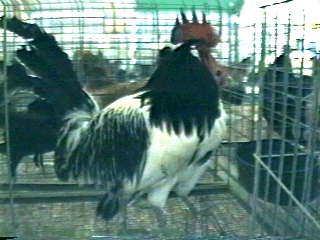
Lakenvelder Cockerel
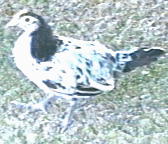
Lakenvelder Pullet
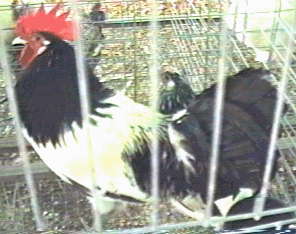
Lakenvelder Cockerel
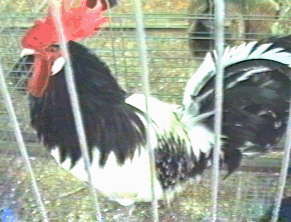
Lakenvelder Cock
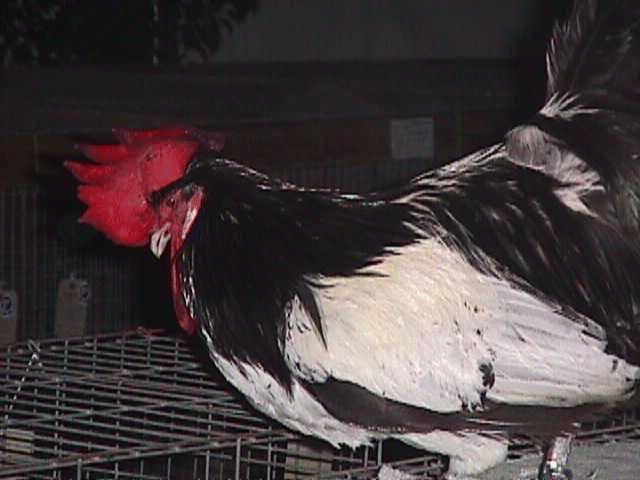
Lakenvelder Cock
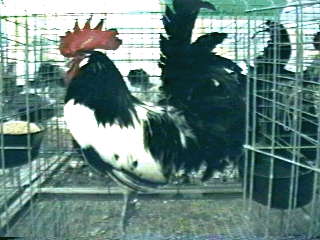
Lakenvelder Cockerel
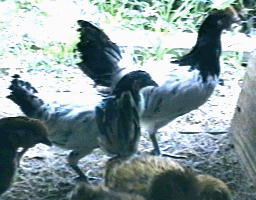
Lakenvelder Pair