Australorps: Australia’s Premier Heritage Breed
The Black Australorp is a legendary dual-purpose heritage breed that has earned its place as a staple in backyard flocks around the world. Developed in Australia for high-volume egg production without sacrificing meat quality, this breed is often called the "honorary national bird" of the Australian poultry world. Whether you are a beginner looking for a friendly pet or a seasoned homesteader seeking a reliable egg producer, the Australorp is an exceptional choice.
History and Origins
The Australorp (a name derived from "Australian Black Orpington") was developed in the early 1900s. Breeders used Black Orpingtons imported from England and crossed them with Minorca, White Leghorn, Langshan, and even some Plymouth Rock bloodlines to enhance their utility features.
The breed shot to international fame in the 1920s when a team of six hens set a world record by laying 1,857 eggs in one year—an average of nearly 310 eggs per bird. One exceptional hen later set the ultimate record, laying 364 eggs in 365 days. The breed was officially recognized by the American Standard of Perfection in 1929.
Their conservation status is Sustainable / Recovering.
Physical Characteristics
Australorps are large, heavy birds with a sturdy, muscular build and a "trimmer" appearance compared to their Orpington ancestors.
- Plumage: Their most striking feature is their solid black feathers, which display an intense, iridescent beetle-green sheen in the sunlight.
- Facial Features: They possess large, upright red single combs, red wattles, and dark eyes.
- Skin and Legs: They have white or pinkish-white skin and black or slate-colored legs.
- Size: As a heavy breed, they are substantial:
- Roosters: 8.5 to 9 lbs
- Hens: 6.5 to 7 lbs
Production and Purpose
The Australorp is the quintessential dual-purpose breed, valued for both its record-breaking laying abilities and its plump, high-quality meat.
- Egg Laying: Most backyard Australorps reliably produce between 250 and 300 large, light brown eggs annually.
- Winter Laying: They are renowned for being excellent winter layers, continuing to produce eggs even as daylight hours decrease.
- Maturity: Pullets are early bloomers, typically starting to lay eggs between 4 and 6 months of age (roughly 16–24 weeks).
- Lifespan: They are a long-lived breed, often remaining productive for several years and living between 6 to 10 years in total.
Temperament and Behavior
One of the reasons the Australorp is so beloved is its "active yet gentle" personality.
- Docile: They are extremely calm, quiet, and friendly, making them ideal for families with children.
- Social: They are non-aggressive and integrate well into mixed-flock settings.
- Adaptable: While they love to free-range and are excellent foragers, they are also quite tolerant of confinement as long as they have enough space.
- Maternal: Unlike many high-production breeds, Australorps have retained their mothering instincts. They make excellent sitters (broody hens) and attentive mothers.
Care and Management
While Australorps are low-maintenance and robust, they do have specific needs to stay healthy:
- Diet: To support their high egg production, they require a high-quality layer feed with at least 16% protein.
- Space: In the coop, provide at least 4 square feet per bird. Because they are large, roosts should be set at a manageable height of 2 to 4 feet.
- Climate Considerations:
- Cold: Their thick feathers make them highly cold-hardy.
- Heat: Because of their black feathers, they can overheat quickly. Ensure they have access to plenty of shade and fresh water during summer months.
- Health: They are generally disease-resistant but should be checked regularly for mites and lice, which can hide in their dense plumage.
The Black Australorp remains a "gold standard" for the backyard enthusiast. With their stunning iridescent feathers, quiet nature, and unmatched productivity, they are a rewarding addition to any homestead.
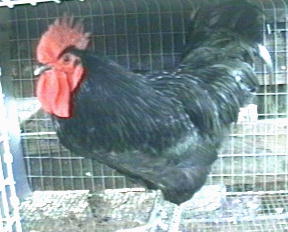
Black Australorp Cock
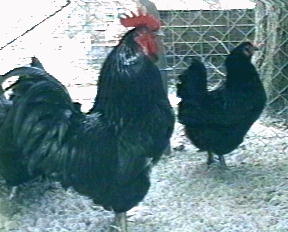
Black Australorp Pair
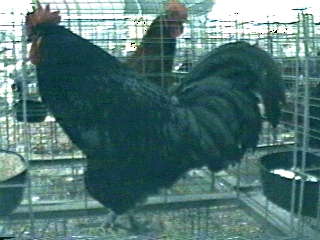
Black Australorp Cock
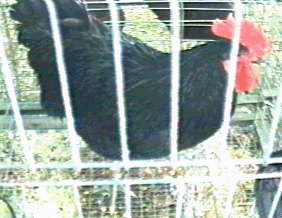
Black Australorp cockerel
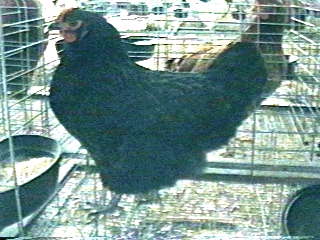
Black Australorp Hen