Dorkings: A Five Toed Dinosaur
The Dorking is one of the most venerable and historic breeds in the poultry world. A British classic named after the market town of Dorking in Surrey, England, this breed is a "brick-like" powerhouse prized for centuries for its superlative table qualities and gentle nature.
History: From Rome to the New World
The origins of the Dorking are shrouded in antiquity and speculation. Popular history suggests they were brought to Britain by the Romans in 43 AD. A Roman writer Columella described five-toed poultry as the "most generous" breeding stock as early as the first century. Some speculate they may have even been traded to Britain by Phoenicians earlier.
By the 19th century, the Dorking was the premier meat bird of London markets until it was eventually displaced by the Sussex. It was one of the first breeds brought to the Americas by early settlers and was featured in the first-ever poultry shows in both London (1845) and America (1849). Today, the Dorking is considered a threatened heritage breed in need of dedicated conservation.
Unique Physical Characteristics
The Dorking is easily identified by its distinct silhouette and a rare genetic trait: five toes instead of the standard four.
- Body Shape: They have a long, deep, rectangular body often described as "boxy" or "brick-like," set upon very short legs.
- Size and Weight: Despite their short stature, they are heavy birds.
- Standard weights: Roosters range from 9 to 14 lbs; hens range from 7 to 10 lbs.
- Comb and Wattles: They feature large red earlobes and either a large single comb or a rose comb.
- Skin and Flesh: Unlike many American breeds, Dorkings have white skin and fine-textured white meat.
- Color Varieties: Recognized varieties include Silver-Gray (the most popular), White (the oldest), Cuckoo, Red and Colored *.
Comb Style
| Variety | Comb Style | Admitted |
|---|---|---|
| Colored * | Single | 1874 |
| Cuckoo | Rose or Single | 1998 |
| Red | Single | 1995 |
| Silver-Gray | Single | 1874 |
| White | Rose | 1874 |
* Note that the term "Colored" here refers to "golden version of the old-fashioned Dark Grey pattern". Colored roosters have black breasts and tails, with straw-colored or golden-streaked hackle and saddle feathers. Colored hens show black on the back and tail with gold or straw-colored shafting, and dark salmon-colored breasts.
Production: Eggs and Meat
The Dorking is a true dual-purpose utility bird, though it was developed primarily for its gourmet meat.
- Table Quality: The meat is famously tender and delicate, particularly in the breast and wings. Historically, they were so valued that a rumor claimed the town of Dorking forbid selling them alive!
- Egg Laying: They are respectable layers, producing 140 to 190 medium to large white or creamy eggs annually.
- Laying Start: While pullets are slow to start at about 20-24 weeks, they are excellent winter layers, providing eggs when other breeds stop.
- Size Maturity: They are slow to grow which can take up to 2 years to reach full size.
- Broodiness: Dorking hens are legendary mothers. They go broody easily and are known to stay with their chicks (and even adopt others) much longer than average hens.
Temperament and Behavior
Dorkings are widely regarded as one of the most docile and friendly breeds available.
- Gentle Giants: Both hens and roosters are calm and easy to tame, often following their owners like pets. They are excellent for families with children.
- Pecking Order: Because of their non-aggressive nature, they often end up at the bottom of the pecking order and should not be housed with aggressive breeds like Cornish.
- Foraging: They are active foragers but, interestingly, do not scratch as destructively as other breeds. Despite their short legs, they have a surprising affinity for roosting in trees if given the opportunity.
Care and Management
- Climate: They are hardy and handle both heat and cold well. However, because of their large single combs, they are susceptible to frostbite. In northern climates, the rose-comb variety is a safer choice, or coop heaters/protection may be needed.
- Space: Dorkings do not thrive in cramped confinement. They need room to roam to avoid becoming "weedy" or small.
- Lifespan: These are long-lived heritage birds, typically living 5 to 7 years, with some reaching 10–12 years.
- Breeding: They do not handle inbreeding well; for the breed to thrive, breeders must select for size and genetic diversity to maintain their "brick" shape.
By raising Dorkings, keepers are not only rewarded with delicious meat and winter eggs but are also participating in the preservation of one of the most ancient and gentle lineages in poultry history.
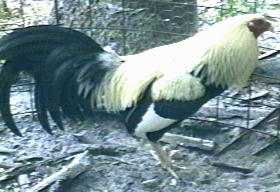
Silver Gray Dorking Cock