Minorca: Majestic and Endangered
By Dennis HawkinsThe Minorca is the largest and most imposing of the Mediterranean chicken breeds. Originating on the island of Menorca off the coast of Spain, it was historically known as the "Red-Faced Black Spanish" or the "Moorish Fowl." While it is a celebrated exhibition bird worldwide, it is currently considered an endangered breed in its native Balearic Islands.
History and Development
The Minorca likely descended from the ancient Castilian breed and was refined into its "international type" by the British during their occupation of Menorca in the 18th century. While known locally as "Gallina de Menorca" ("Chicken from Menorca"), British sailors brought the birds back to England in the 1830s, where they became known by the Anglicized name "Minorca" by the 1830s/1840s.
- Global Export: The breed reached England as early as 1780 and was imported to the United States in 1884.
- APA Recognition: Admitted to the American Poultry Association Standard of Perfection in 1888 (Single Comb Black and White varieties), with Single Combed Buff (1913) and Black and White Rose Comb variants following in 1904 and 1914 respectively.
- Conservation: In 2012, the Spanish population was recorded at only 460 birds. Conservation programs are currently underway in Menorca to preserve the breed's biodiversity.
Physical Appearance and Weight
Minorcas are muscular, imposing birds characterized by their "stately" carriage and massive white earlobes.
- Standard Weights:
- Roosters: Approximately 9 lbs.
- Hens: Approximately 7.5 lbs.
- Plumage and Colors: The most traditional variety is glossy greenish-black, though White and Buff varieties are also recognized. They have white skin and dark slate (Black variety) or pinkish-white (White/Buff varieties) legs.
- Single Comb: Large and red with six well-defined points. In cocks, it stands upright; in hens, it flops gracefully to one side.
- Rose Comb: Moderately large, solid, and flat red comb that sits upright on the head, covered with small, rounded bumps or points.
- Earlobes: Strikingly large, oval, and pure white.
- Eyes: Dark brown in black birds; reddish-bay in white and buff varieties.
Egg Production and Dual-Purpose Use
While often kept for ornament or exhibition, the Minorca is a true dual-purpose breed, though its meat is noted for being lean and dry (traditionally addressed by "larding" the bird before roasting).
- Egg Quality: Minorcas lay what is arguably the whitest shelled egg of any breed. The eggs are typically extra-large, often exceeding 65 grams.
- Annual Yield: Depending on the strain, they lay between 120 and 220 eggs per year.
- Time to First Egg: Pullets typically begin laying around 26 weeks (6 months) of age, though some may start as early as 20 weeks. While they start with moderate eggs, they reach their peak "jumbo" egg size by their 57th week.
- Broodiness: Like most Mediterranean breeds, they are non-broody.
Temperament and Behavior
- Rooster Aggressiveness: Minorca roosters are generally not aggressive toward humans. They are described as confident, alert, and independent. While they are not "cuddly" and can be flighty, they are significantly more manageable than the more aggressive Leghorn males.
- Social Dynamics: They tend to hold a high rank in mixed flocks but use their speed and size to avoid direct confrontation with dominant birds.
- Handling: They are "nervous" and flighty, making them a poor choice for small children. However, they can be trained to be friendly with regular, gentle handling from a young age.
- Environment: They thrive in heat but are highly susceptible to frostbite due to their enormous combs and wattles. They tolerate confinement better than some Mediterranean breeds but much prefer to be free-range.
Lifespan and Health
- Average Lifespan: Typically 5 to 8 years, with some hardy individuals reaching 10 years.
- Climate Concerns: They are rugged and excellent at evading predators, but they require significant protection from cold, damp, and windy conditions to protect their large appendages from freezing.
- Nutrition: To support their large frame and high egg production, they should be transitioned to high-quality layer feed by 16–18 weeks of age.
The Minorca chicken represents a historically significant and visually striking breed with a rich history rooted in the Mediterranean. Despite its endangered status, the breed offers unique characteristics regarding egg quality, temperament, and physical conformation.
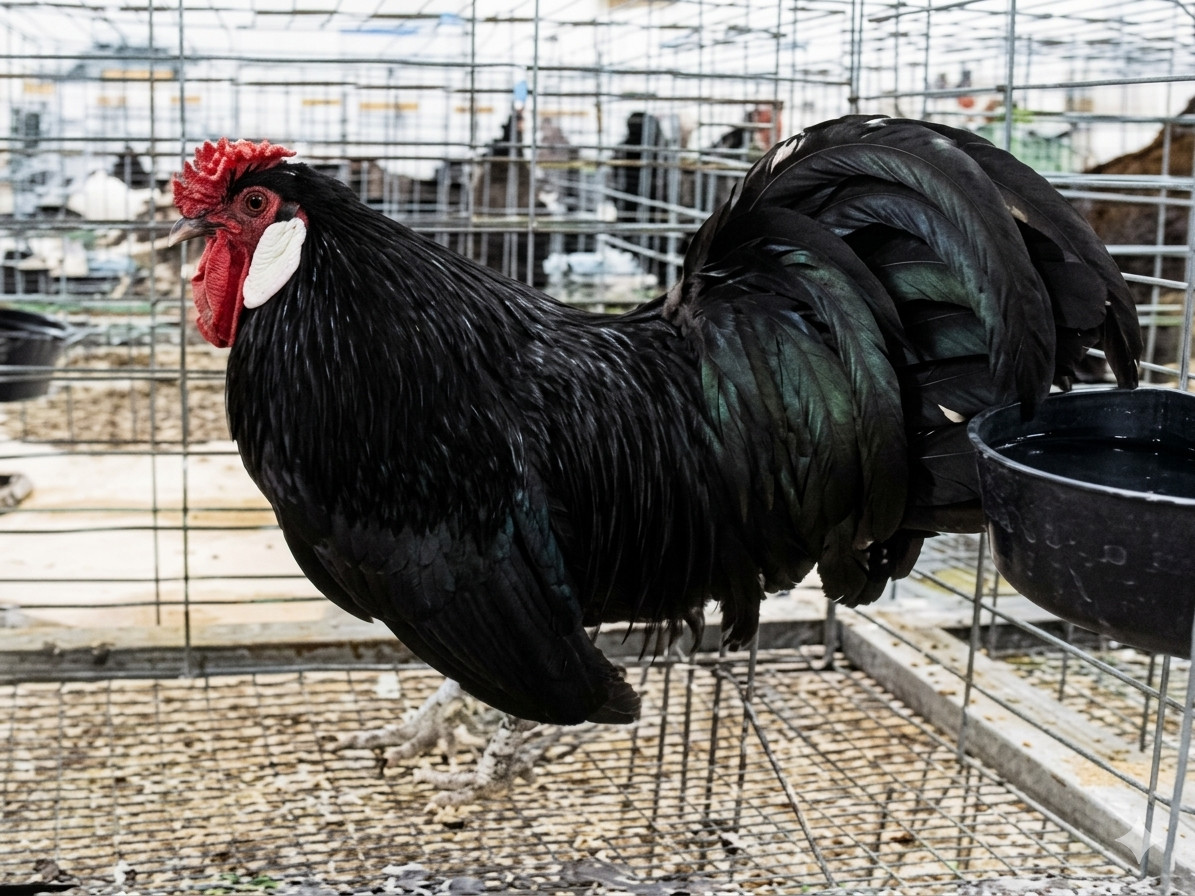
Black Minorca Cock