Sultan: Living Ornaments of Royalty
The Sultan is an ancient and strikingly exotic breed of crested chicken hailing from the historical regions of southeastern Europe and Turkey. Known originally by the Turkish name Sarai-Tavuk or Sarai Täook (translated literally as "fowls of the sultan" or "Sultan's palace fowl"), legend dictates that these birds were kept as living ornaments in the royal gardens of the Ottoman Empire. Today, the Sultan is prized entirely as a gentle, exotic pet and an extraordinary exhibition bird.
Origins and History
The Sultan’s roots trace back to the 14th-century Ottoman Empire. It remained largely confined to royal Turkish gardens until 1854, when Elizabeth Watts of Hampstead — the editor of the London-based Poultry Chronicle — received a small shipment of the birds from a friend living in Constantinople. The birds reportedly arrived in dreadful, mud-stained condition, but after a successful molt, their magnificent pure-white plumage was revealed. Every Sultan chicken found in the Western world today descends from this original historic stock.
- Arrival in America: The breed reached North American shores in 1867 and was quickly embraced by poultry experts for its remarkably tame and contented disposition.
- APA Recognition: The White Sultan was officially recognized and included in the very first American Poultry Association Standard of Perfection (then called the Standard of Excellence) in 1874.
- Conservation Status: The Sultan almost faced total extinction in the 1930s and remains critically rare. It is officially reported to the Domestic Animal Diversity Information System (DAD-IS) by six countries: Turkey, the United States, the United Kingdom, Australia, Ireland, and Serbia. The world population is profoundly low; in Turkey, the 2024 population was estimated at just 20 birds, and the total global population was estimated at 86 birds. It is listed as "threatened" by the Livestock Conservancy (USA), a "priority" breed by the Rare Breeds Survival Trust (UK), and "at risk/endangered" globally by DAD-IS.
Physical Characteristics
The Sultan is structurally unique, possessing more distinguishing, ornamental features than almost any other breed in existence. They are a lightweight breed that stands somewhat erect, with wings carried low in a fashion that naturally obscures their thighs and upper hocks.
- Distinct Features: They feature a full crest, a heavy beard, and facial muffs. They also possess large nostrils, a pale blue or flesh-colored beak, reddish-bay/red eyes, and a bright red, V-shaped comb. (The comb is typically visible only on the roosters, as it is completely hidden by the dense crest feathers on hens).
- Legs and Feet: They sport heavily feathered shanks and toes, "vulture hocks" (pronounced feathers pointing backward from the thighs), and five toes on each foot rather than the typical four.
- Approved Colors: The American Poultry Association officially recognizes only the White variety, which features slate-blue to pale-blue shanks and toes. While Black and Blue variants exist, these are rare and are likely the historical result of outcrosses made with Polish chickens to inject new blood into the lines.
Standard Weights
- Cock (Adult Male): 6 lbs
- Hen (Adult Female): 4 lbs
- Cockerel (Young Male): ~5 lbs
- Pullet (Young Female): ~3.5 lbs
Temperament and Rooster Aggressiveness
Sultans are legendary for being among the tamest, most affectionate, and serene chickens a backyard keeper could own. Early poultry writers noted that they "almost constantly" sing a quiet, contented chicken song.
- Rooster Aggression: Sultan roosters are not aggressive. They are characteristically docile, exceptionally calm, and gentle birds that frequently enjoy being handled and held by humans.
- Flock Dynamics: Because they are so incredibly passive and have severely restricted peripheral vision due to their large head crests, Sultans are easily startled and highly susceptible to being bullied by more assertive breeds. They must always be housed in a separate flock or strictly paired with other docile, non-aggressive breeds.
- Child Friendliness: Due to their sweet, chatty nature, they make exceptional pets for children or urban backyard setups.
Egg Production and Maturity
Sultans are a slow-maturing breed that is entirely unsuited for commercial production. They prioritize physical ornamentation over meat and egg efficiency.
- Time Until First Egg: While standard breeds lay around 5 months, Sultan pullets typically take 6 to 10 months to mature and lay their first egg, frequently waiting until the 8-to-10-month mark depending on daylight hours and diet.
- Annual Egg Production: They are poor, highly inconsistent layers. A standard hen will lay roughly 50 to 70 small white eggs per year (with a median egg weight of 53 grams). They generally cease all egg production completely during the winter months.
- Maternal Instincts: Sultan hens are classified as "non-sitters." They possess very little maternal instinct and exhibit almost no tendency toward broodiness.
Lifespan and Specialized Care Requirements
As a heritage-style ornamental bird protected from commercial wear-and-tear, a Sultan chicken has a typical lifespan of 5 to 10 years when kept under optimal backyard care. However, achieving this longevity requires dedicated, high-maintenance management.
- Climate Sensitivity: Sultans are sensitive to extreme weather. While they handle warm climates well if provided with shade and cool water, they suffer greatly in cold, damp environments. If their dense crests, leg feathers, or beards get wet in freezing temperatures, they are highly susceptible to severe frostbite.
- Confinement and Foraging: Sultans adapt beautifully to confinement and run environments. Interestingly, historical documentation notes that their feathered feet cause far less damage to grass runs than heavy breeds like Brahmas or Cochins, allowing their turf to remain green. They are delicate foragers that heavily prefer grains and insects over tearing up garden vegetation.
- Predator Protection: Because their crests severely block their upper and side vision, Sultans cannot easily spot overhead or approaching predators. Secure, predator-proof housing and covered runs are absolute requirements to ensure their survival.
The Sultan is a captivating and gentle breed prized for its unique ornamental features and serene temperament. While their slow egg production and sensitivity to climate necessitate specialized care, they remain wonderful companions for those who appreciate exotic poultry. Proper housing and attention ensure that these living ornaments continue to thrive as cherished members of the flock.
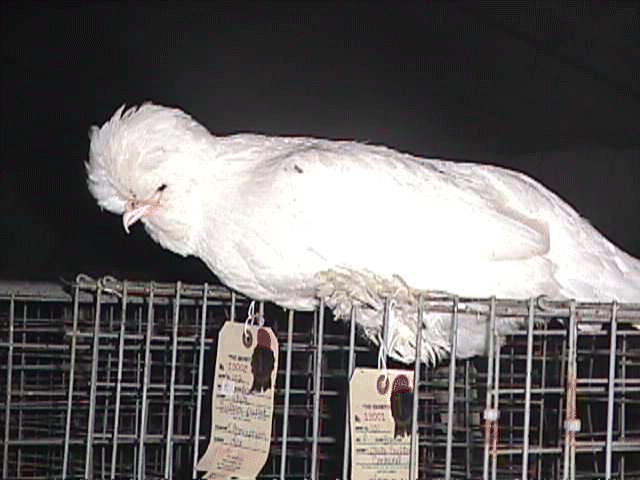
Sultan Hen
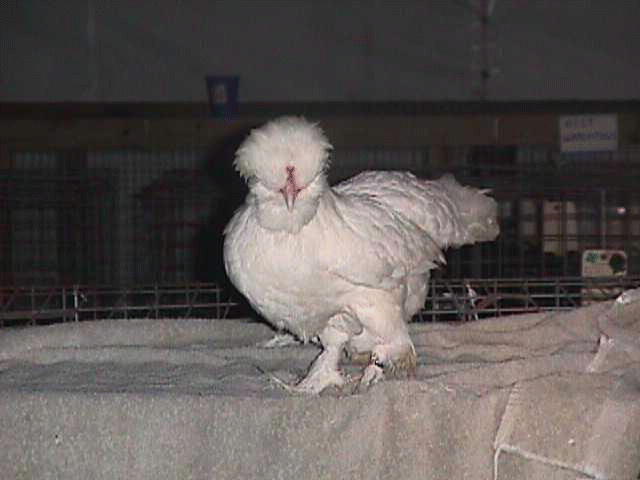
Sultan Hen