Junglefowl: The Ancestor of the Domestic Chicken
The junglefowl represents the true, undomesticated baseline of the global chicken population. Belonging to the tropical, galliform genus Gallus within the phasianid (pheasant) family, these birds are native to the dense forests and disturbed edge habitats of South and Southeast Asia.
As the primary genetic progenitors of the billions of domestic chickens (Gallus gallus domesticus) alive today, junglefowl are a vital bridge between wild biology and modern agriculture. Shyer, lighter, and more agile than their domestic descendants, these avian survivors offer a captivating look at poultry in its purest, wildest form.
Taxonomy and the Four Species of Gallus
The genus Gallus was formally introduced in 1760 by French naturalist Mathurin Jacques Brisson. The word gallus itself is Latin for a farmyard cockerel. Decades prior, in 1758, the Swedish naturalist Carl Linnaeus had described the foundational species, the Red Junglefowl, under the binomial name Phasianus gallus in the tenth edition of his Systema Nature, originally restricting its type locality to the island of Pulo Condor (Côn Đảo) off the coast of Vietnam.
Modern taxonomy breaks down the genus Gallus into four distinct, wild species:
- Green Junglefowl (Gallus varius)
- Red Junglefowl (Gallus gallus)
- Sri Lankan Junglefowl (Gallus lafayettii)
- Grey Junglefowl (Gallus sonneratii)
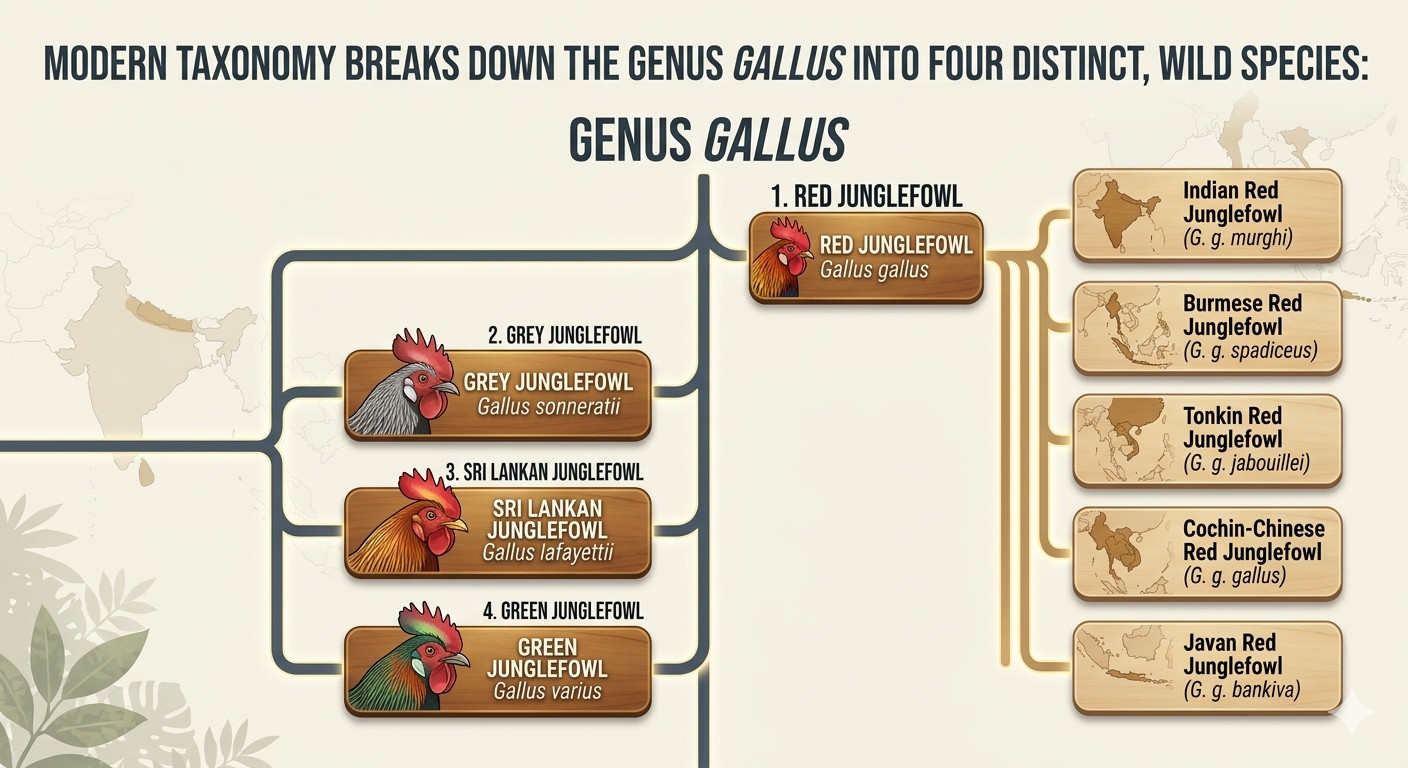
Because the Red Junglefowl covers an expansive geographical footprint, it is further divided into five distinct regional subspecies:
- G. g. murghi (Indian Red Junglefowl): Found across northern India, Nepal, Bhutan, and Bangladesh.
- G. g. spadiceus (Burmese Red Junglefowl): Ranging from northeast India into southern China, the Malay Peninsula, and northern Sumatra.
- G. g. jabouillei (Tonkin Red Junglefowl): Native to southern China, northern Vietnam, and northern Laos.
- G. g. gallus (Cochin-Chinese Red Junglefowl): The nominate subspecies, found from southern Myanmar all the way through Indochina.
- G. g. bankiva (Javan Red Junglefowl): Restricted locally to Java and Bali.
Physical Characteristics and Leg-Color Differentiation
Junglefowl are athletic, small-bodied birds built for survival. They display extreme sexual dimorphism, meaning males (roosters) and females (hens) look drastically different from one another.
To differentiate a wild junglefowl from a common domestic or feral chicken, look closely at their weight, body carriage, and species-specific leg colors:
- Weight & Mass: They are significantly lighter than domestic breeds. An adult Red Junglefowl averages roughly 1.7 lbs overall.
- The Male Plumage: Roosters are intensely colorful. Their mantles (neck and back) feature long, golden-yellow to deep red-orange hackle feathers. Their tails are comprised of 14 iridescent, curved feathers that shimmer blue, purple, and green in direct light, reaching lengths up to 11 inches. The entire length of a male can reach 28 inches.
- The Female Plumage: Hens are entirely drab, covered in muted brown, tan, and black earthy tones that provide optimal camouflage while nesting on the forest floor. They completely lack the ornate, long plumes of the males.
- The Eclipse Molt: Unlike domestic chickens, wild junglefowl undergo a specialized "eclipse molt" between June and October. After breeding season, the rooster sheds his brilliant hackles, temporarily replacing them with short, black and dull red-orange feathers along the mantle.
Species Identification Matrix
The four distinct species of junglefowl can be easily differentiated from one another by inspecting their combs, skin, and legs:
| Species | Comb & Wattle Features | Leg Color | Skin Color |
|---|---|---|---|
| Red Junglefowl | Medium, bright red single comb with even serrations; matching red wattles/earlobes. | Characteristic grayish to slate-blue (Crucial for telling them apart from yellow-legged feral chickens). | Pale/light white |
| Grey Junglefowl | Smaller, less prominent red single comb and wattles. | Pinkish to pale yellowish-fleshed | White to pale yellow |
| Green Junglefowl | Un-serrated, smooth comb that shifts from bright blue at the base to pink at the edges; single large red wattle. | Yellowish | Pale |
| Sri Lankan Junglefowl | Bright red single comb featuring a distinct yellow-orange center. | Bright yellow | Pale |
The History and Science of Chicken Domestication
For centuries, scientists debated the exact family tree of the domestic chicken. Today, whole-genome sequencing has unlocked the answers.
Genetic Timeline
Molecular evidence proves that the domestic chicken (Gallus gallus domesticus) was first domesticated from the Red Junglefowl thousands of years ago. A comprehensive 2020 study sequencing 863 chickens worldwide pointed to a single, primary domestication event involving the Burmese Red Junglefowl (G. g. spadiceus) in Southeast Asia. From there, early domestic variants migrated across South Asia, interbreeding opportunistically with local wild subspecies to form geographically unique groups.
Archaeological digs present complementary data, showing chicken utilization at the Chishan site in Hebei, China, and heavy usage in the Ganges region of India. Clear domestic chicken remains finally solidified in the Indus Valley (Mohenjo-daro) a few thousand years ago.
The Hybridization Mystery
While the Red Junglefowl is the main maternal ancestor, domestic chickens are technically genetic mosaics. Red junglefowl do not easily produce fertile hybrids with the other three wild species. However, a breakthrough 2008 study revealed that the gene responsible for the vibrant yellow skin and legs seen in modern domestic chickens (Ml and W+ pathways) actually originated from ancient cross-hybridization with the Grey Junglefowl, not the Red Junglefowl.
In Indonesia, a culturally famous, intentional hybrid bred between a Red Junglefowl rooster and a Green Junglefowl hen produces a striking, prized bird known as the Bekisar. Today, wild-type Red Junglefowl share between 71% and 79% of their DNA with the common domestic chicken.
Wild Habits, Egg Production, and Lifespan
Junglefowl are highly social, living in small territorial flocks consisting of one or two dominant males and several females.
- Time Until First Egg: Young junglefowl reach sexual maturity between 5 to 8 months (22 to 32 weeks) of age, with hens taking slightly longer to mature than cockerels.
- Annual Egg Yield: In stark contrast to domestic layers that produce year-round, a wild junglefowl hen lays an average of just 10 to 15 eggs per year. Their reproductive cycle is strictly bound to seasonal food availability—typically laying only in the dry winter or spring seasons of their native tropical habitats.
- Clutch & Incubation: They lay small, near-round, light brown or cream-colored eggs. The hen lays one egg per day into a hidden ground nest until a small clutch of 4 to 8 eggs is complete. She then becomes intensely broody, incubating them for exactly 21 days.
- Chick Development: Chicks mature with extreme speed. They fledge (develop flight feathers) within 4 to 5 weeks. At exactly 12 weeks of age, the mother hen aggressively chases them out of the flock, forcing them to join existing wild groups or establish their own.
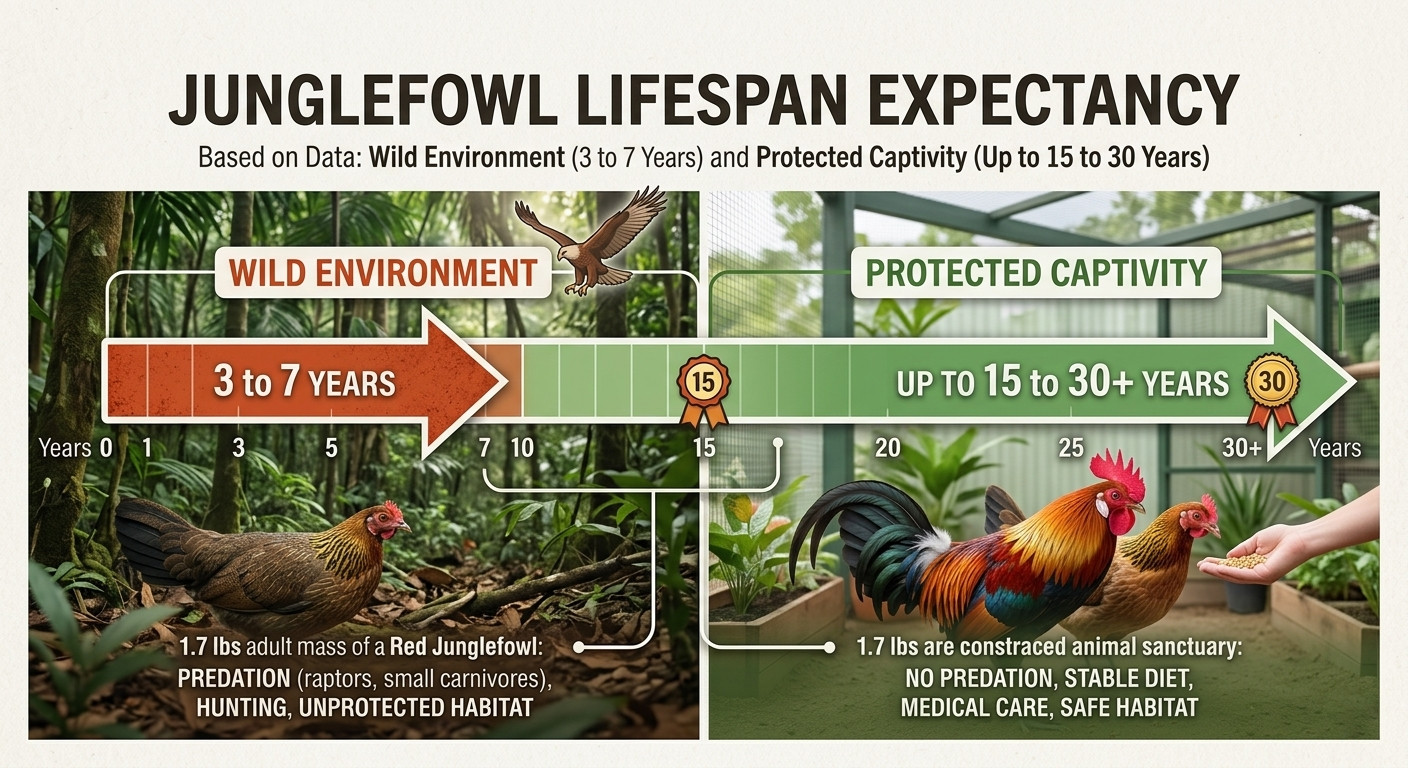
- Lifespan: In their native, predator-dense habitats of Southeast Asia, wild junglefowl face intense pressure from birds of prey and small mammalian carnivores, resulting in a short lifespan of 3 to 7 years. However, in protected captivity, zoos, or optimal sanctuary environments, they display incredible longevity, routinely living 10 to 15 years, with verified genomic records documenting extraordinary individuals surviving up to 30 years.
Diet, Flight, and Survival Instincts
Junglefowl are wary, fast, and hyper-vigilant. They are highly adapted to avoiding danger in a way that domestic chickens are not.
- Flight Ability: Flight is an essential tool for survival. Junglefowl utilize their wings throughout the day to instantly blast away from immediate ground danger. At sunset, the entire flock takes flight to roost safely high up in the forest canopy—ranging from low perches of 4 meters for hens with chicks up to towering 12-meter perches for dominant adults.
- Complex Communication: Flocks feature highly complex social hierarchies and sophisticated vocal structures. They possess entirely distinct, specific alarm calls to warn the flock of an aerial predator (like a hawk) versus a ground predator (like a leopard).
- The Native Crow: While male junglefowl announce the dawn using the familiar "cock-a-doodle-doo" pattern, their crow sounds noticeably shorter, more high-pitched, and cuts off abruptly at the end compared to a domestic rooster. The top-ranking alpha rooster always crows first, followed by his subordinates in descending order of social rank.
- Opportunistic Diet: They are omnivorous foragers. While adult birds primarily eat plant material — including fallen fruits, seeds, grain, leaves, roots, tubers, and bamboo seeds — they opportunistically consume vast quantities of insects. A single bird's crop was found to contain over 1,000 termites. They also readily consume earthworms, small lizards, and even mammalian feces. Chicks stick to a strict, high-protein diet consisting almost entirely of insects and larvae.
Rooster Behavior and Aggression
Junglefowl roosters are intensely territorial and fiercely independent. Because they are wild indigenous animals, their survival instincts are governed by high social tension, sharp protective drives, and a natural predisposition to defend their breeding rights.
Why They Clash
Within a flock, dominant roosters work tirelessly to maintain exclusive reproductive access to their hens. They actively patrol their home ranges—establishing territories with roosting centers that can sit as close as 100 meters to a rival flock.
When kept in close proximity to humans or managed in backyard flocks, a junglefowl rooster can easily view humans as direct territorial rivals or predators. Hormonal surges peak as they reach maturity and intensify dramatically during the spring mating season. When a rooster decides to challenge an owner, he will aggressively charge, peck, or "flog" (flying upward and striking forward with his wings and feet), utilizing the long, razor-sharp, bony spurs located on the back of his legs to inflict deep puncture wounds.
Managing Wild Aggression
Managing a wild-type rooster requires a firm, confident hand:
- Assert Visual Boundaries: Never step backward or run away when a junglefowl rooster charges. Fleeing validates his alpha status and encourages future attacks. Walk directly and confidently into his space to force him to yield.
- Assertive Handling: If a rooster attacks, immediately pick him up using a towel or heavy gloves to secure his wings. Hold him firmly against your body until his heart rate slows and his muscles relax, establishing yourself as the dominant force in the environment.
- Safety Gear: Because of their speed and sharp spurs, always wear thick pants, tall boots, and long sleeves when entering an enclosure with an aggressive mature male.
- Coop Architecture: Never attempt to house multiple mature junglefowl roosters inside a standard or confined coop setup. Their agonistic nature will inevitably result in severe, often fatal, territorial fighting.
Relationship with Humans and Conservation
Today, billions of domestic chickens satisfy human global food demands, yet wild junglefowl remain culturally and ecologically significant. In their native ranges, wild populations are still hunted for meat and harvested for eggs, and their pure strains are occasionally captured for the localized cock-fighting trade. Zoos and botanical gardens frequently use them alongside peafowl as a highly effective, natural form of free-roaming insect and tick control.
The "Gypsy Chickens" of Key West
A famous, modern population of feral junglefowl descendants thrives on the island of Key West, Florida. Known locally as "gypsy chickens," these birds are a genetic mix of Caribbean junglefowl, Cuban fighting roosters, and 19th-century settler backyard flocks. When cockfighting was legally banned in 1986, hundreds of birds were released into the wild. Today, they are a fully protected, iconic island staple. While tourists love watching them cross busy streets and roost in trees, locals hold mixed feelings — praising them as free pest control for scorpions and insects, while occasionally lamenting their loud, early morning crowing. The Key West Wildlife Center actively steps in to rescue and rehabilitate sick or injured birds.
Conservation Vulnerability
The International Union for Conservation of Nature (IUCN) currently lists the Red Junglefowl as a species of Least Concern, though global wild populations are steadily decreasing.
The greatest threat to the purity of the wild junglefowl is not predation, but genetic dilution. As human urbanization and slash-and-burn agriculture encroach deeper into tropical forest edges, free-ranging domestic village chickens frequently interbreed with wild flocks. This rampant hybridization threatens to permanently wipe out the unique, pure genetic traits and survival adaptations that the wild junglefowl has perfected over time. In highly urbanized locales like Singapore, the pure wild Red Junglefowl is already classified as Near Threatened.
The wild junglefowl serves as a vital genetic blueprint and a living reminder of the origins of our modern domestic poultry. While their remarkable survival skills, complex social dynamics, and intense adaptability have allowed them to thrive for millennia across Asia, their future is increasingly compromised by habitat loss and genetic pollution. Protecting these wild, pure bloodlines is essential, ensuring that the ancient resilience of the genus Gallus is preserved for generations to come.
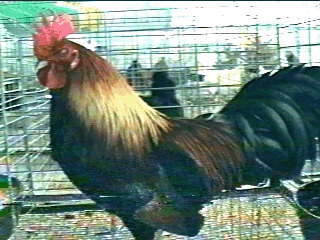
Indian Red Jungle Fowl Cockerel